Canva pauses 5,300 staff for AI Discovery Week with OpenAI, Anthropic and Google
Canva paused normal work for its 5,300 staff this week to run a five-day program of artificial intelligence learning and hackathons. Speakers from OpenAI, Anthropic and Google joined the second annual AI Discovery Week at the Sydney design giant.
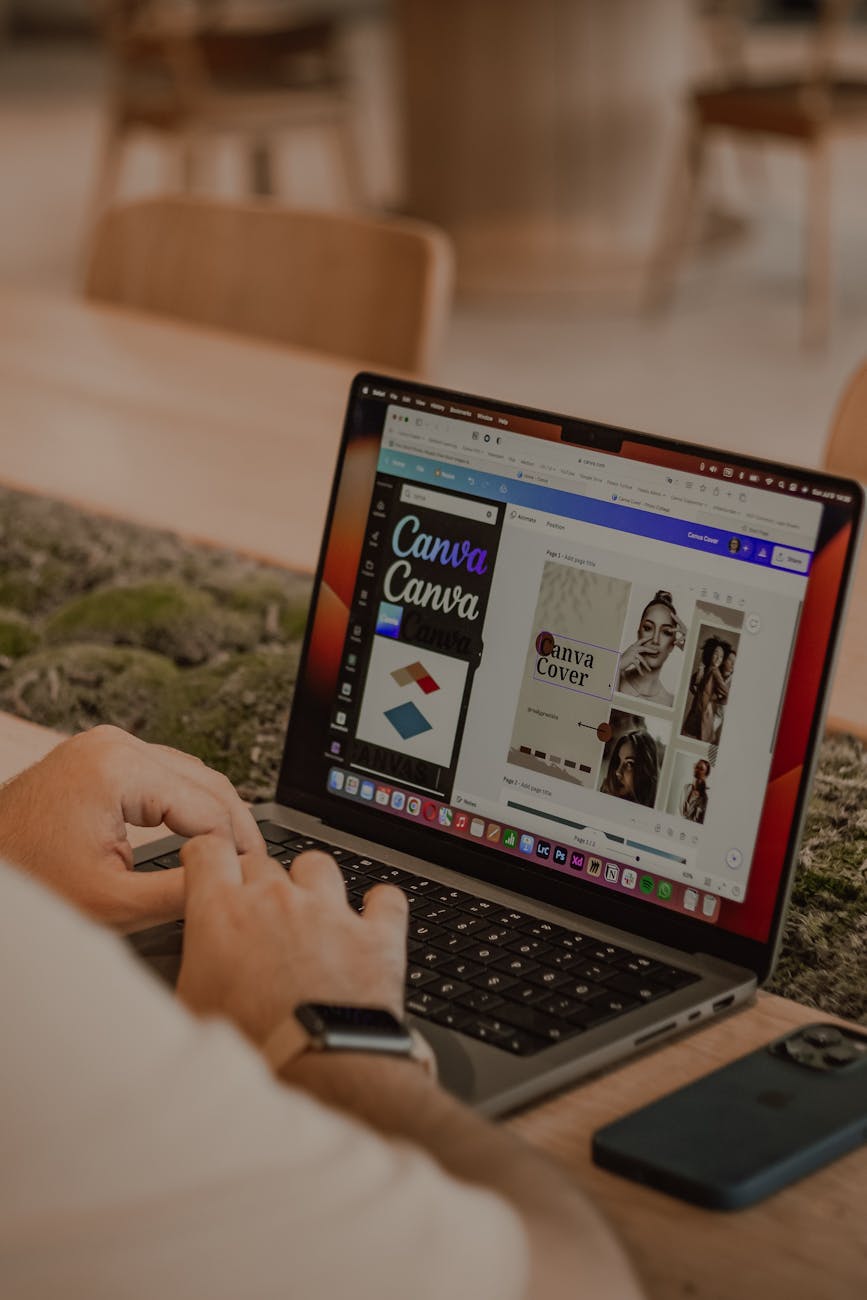
Canva paused normal work for its 5,300 staff this week to run a five-day program of artificial intelligence learning and hackathons, with speakers flown in from OpenAI, Anthropic and Google.
The Sydney-headquartered design software company calls the program “AI Discovery Week” and is running it for the second time. Chief people officer Jennie Rogerson, who designed it, said the format grew out of a biannual staff poll. “What they wanted was time and space to look at AI and tinker with it and explore and learn,” Rogerson said in an interview from Sydney.
Participation is optional. Canva said so many staff opted in at its Sydney office that the building ran out of desks. The week includes more than 60 talks and workshops, internal hackathons, and what one Canva executive measured as 50 metres of pizza demolished in 27 minutes.
The pause cuts against a wider tech-sector pattern. WiseTech Global, Block and Atlassian have all reduced headcount in the past six months. Some executives at those companies have pointed to AI as the productivity lever that made the cuts possible.
What is in the program
Canva said the agenda mixes external speakers, peer-led workshops and a company-wide hackathon at the end of the week. Co-founder and chief product officer Cameron Adams said the brief for the hackathon is to build something that would have been impossible without AI. “Not faster workflows, but genuinely new ones that didn’t exist as a realistic option before,” Adams said.
Adams added that the structure is meant to give staff time away from their normal queues. “We see this as an opportunity for folks to tune out of the noise and tune in to what it is they’ve been wanting to achieve with AI, but haven’t been able to crack yet,” he said.
Other sessions covered harder questions. Operations business partner Jose Gato, who works in Canva’s people org, said the agenda included pointed conversations on responsible deployment, environmental cost and where human judgment should still hold. “There’s space to be both nervous and excited at the same time,” Gato said.
Co-founder and chief operating officer Cliff Obrecht set the rationale in a staff message. “The pace of change is unlike anything I’ve seen before, and the teams learning fastest are the ones getting hands-on,” Obrecht said. “That’s why we’re pausing business as usual and giving all 5000-plus Canvanauts the time and space to get curious, experiment, and build.”
How Canva uses AI internally
Rogerson pointed to two internal examples that show how the company is folding AI into daily operations.
The first is “Vibe and Thrive”, a Canva benefit that lets staff spend a wellness allowance. The people team used to receive a constant stream of tickets asking how to use it. AI now handles most of those queries. The humans who used to answer them have been redeployed to work the company considers higher-impact, Rogerson said.
The second is product. Hackathon outputs have shipped to customers. Rogerson cited “About Me”, the personalisation feature Canva unveiled at its Create conference in Los Angeles earlier this year, as a hackathon idea that became a real product.
Engagement around AI has broadened beyond engineering, Rogerson said. Finance teams have run framework workshops on keeping humans in the loop. Canva’s chefs have begun using AI to design menus that better reflect the nationalities represented in the workforce.
A staffing record that runs counter to the trend
Canva is one of the few software companies to entirely avoid major layoffs through five years of market turbulence. Headcount went from 1,000 to 4,000 during the pandemic. In 2024 and 2025 the company quietly tightened, applying two principles when backfilling almost any role: did the job bring “net new skills” the company didn’t already have, or “net new leadership” for an emerging area?
That tapering coincided with the period when generative AI began doing serious work inside the company. Rogerson said the slowdown was about discipline rather than displacement. Her position is that automation has, so far inside Canva, redeployed people rather than replaced them.
Rogerson joined as an executive assistant six years ago, when the company employed 450 people. She is now responsible for the careers of more than 5,300.
How Canva will measure the week
The metric Rogerson chose is buried in the staff poll. One question asks whether employees are happy with the ratio of impactful work to busy work. “If that score goes up, I’ll feel like it was successful,” she said.
The week also lands against a heavier corporate AI push. Canva has made eight AI acquisitions since 2024 and reportedly invested about $400 million in the technology. The company reached its highest-ever valuation of more than $US60 billion after an employee share sale in August 2025. Co-founders Melanie Perkins, Cliff Obrecht and Cameron Adams remain billionaires on the back of that move.
Internally, Rogerson has tried to set a tone that does not pretend the change is easy. “On any given day you might feel bored, excited, scared, underwhelmed, overwhelmed,” she told staff at the kick-off. “There are many emotions that come with this kind of change, and that’s completely fine.”
Her counter to the wider industry framing was plain. “Any job is an evolution,” Rogerson said, “and AI has just sped up that evolution. Yes, the work that you do today may be automated.”
She added one caveat. “When done well, technology like AI can really help to make teams more efficient. That’s the utopia of what we can build. But it’s worthwhile being very open-minded and aware of potential pitfalls.”
The hackathon outputs are due at the end of the week. Whether any of them ship to customers in the manner of the “About Me” feature will be the next test of whether a paused week of AI learning can keep producing things customers actually use.
Asha Iyer
AI editor covering the model wars, AU enterprise adoption, and the policy shaping both. Reports from Sydney.