Why OpenAI put Brockman over ChatGPT, Codex and agents
OpenAI product strategy is shifting towards one agent platform, bringing ChatGPT, Codex and the API stack closer for developers and enterprise buyers.

Software teams already pay for chatbot seats, coding copilots and separate API contracts. Against that backdrop, Greg Brockman’s move to the centre of OpenAI’s product strategy looks less like an org-chart shuffle and more like an attempt to cut down the number of moving parts. OpenAI appears to be steering ChatGPT, Codex and its agent tooling towards one entry point for work that begins with a prompt and ends with an action. That makes this a product story, not a human-resources one.
Reporting from TechCrunch and WinBuzzer gives the reshuffle its weight. Fidji Simo is on medical leave, Nick Turley is moving closer to enterprise work, and Brockman is reportedly taking a firmer hand over decisions just as ChatGPT’s scale, put at 900 million weekly active users in recent reporting, makes product overlap harder to disguise.
In TechCrunch’s account, Brockman described the change as a push to tighten execution around agents:
“We’re consolidating our product efforts to execute with maximum focus toward the agentic future, to win across both consumer and enterprise,”
Greg Brockman, via TechCrunch
Outside the company, the move invites a different reading. Peter Grzybowski has argued that OpenAI’s expansion risks resembling a string of side quests unless the buyer experience gets simpler. Benedict Evans has separately questioned whether OpenAI has a durable moat beyond distribution. Brockman’s broader remit matters because management is trying to answer both critiques at the same time.
One runtime, one front door
OpenAI’s own product pages sketch the architecture Brockman now seems to be formalising. The Responses API computer environment gives developers a runtime for tool use, the ChatGPT agent page pitches a system that bridges research and action, and Codex is presented as a command centre for agentic coding across app, editor and terminal. Seen from inside OpenAI, that overlap is not clutter. It is the early outline of a single platform.
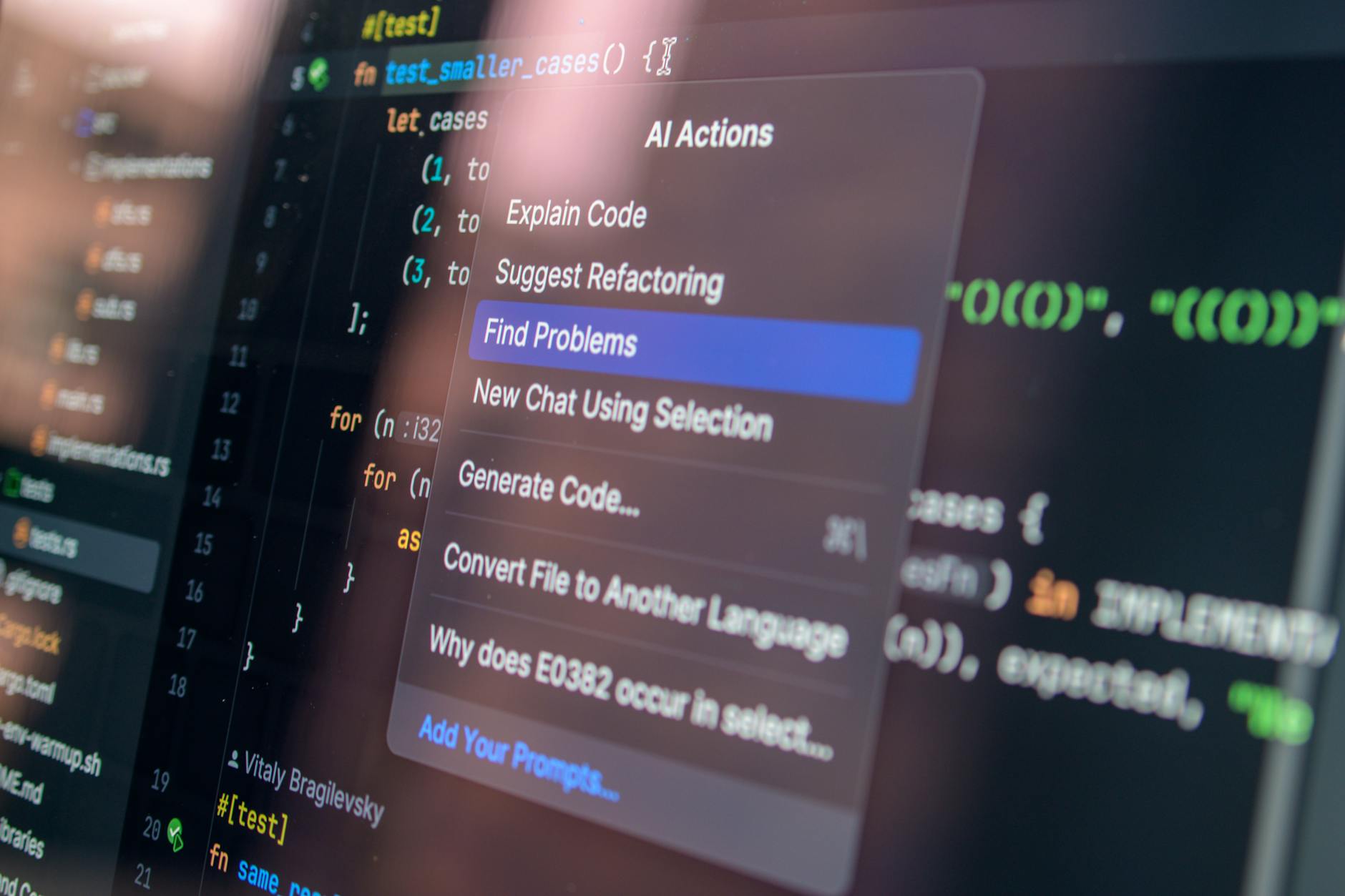
Developers keep circling the same practical question: why should chat, coding and workflow automation live in separate products when the hand-off between them is increasingly the point? Someone who starts in ChatGPT, moves into Codex to edit a codebase and then calls tools through the API is already crossing what used to look like separate product lines. Centralised product strategy suggests OpenAI wants that journey to feel planned rather than accidental.
Procurement teams can see the appeal. One vendor, one contract path, one governance layer and perhaps one support relationship is easier to explain to security and finance teams than a bundle of separate assistants. The trade-off is that simplification can also deepen lock-in. When identity, tool access, runtime behaviour and premium support sit inside the same vendor boundary, customers get coherence but give up some bargaining power.
Coding is where the agent race turns commercial
Coding looks like the first serious commercial wedge in the agent race. CNBC reported that Anthropic’s rapid growth is being driven in part by enterprise demand for Claude Code, while TechCrunch’s reporting on Gemini 3.5 Flash showed Google pushing agents, not chatbots, as the next competitive layer. OpenAI’s recent Codex updates on mobile and Mac, tracked by 9to5Mac, suggest the company knows where daily habit forms.

Evans’s question about distribution lands hardest here. In coding, the winner may not be the lab with the best benchmark in a given week, but the one that becomes the default route from prompt to patch to deployment. OpenAI’s own ChatGPT agent benchmarks claim a 41.6 per cent pass@1 score on Humanity’s Last Exam. That is useful marketing, but the bigger issue is whether Codex becomes sticky enough that developers stop reaching for Claude Code, Cursor or Google’s tools by reflex.
Coding also drags governance into the open sooner than consumer chat does. The Register reported this week on Microsoft’s push to ship safety tools for agentic systems, and separate reporting on security gaps around coding agents has underlined how quickly convenience can become policy debt. A unified OpenAI stack is attractive partly because it promises one control plane, but that promise only matters if the controls are strong enough for real software teams.
Capacity is now part of the product
CIOs and platform teams see another issue: capacity. CNBC’s reporting on OpenAI’s Guaranteed Capacity programme suggests the company is selling reliability almost as aggressively as it sells new features. That pulls compute out of the infrastructure layer and into the product conversation.
In CNBC’s reporting, Sam Altman framed supply as a customer-facing differentiator:
“Customers are increasingly asking us for certainty on capacity. As models get better, we expect that the world will be capacity-constrained for some time,”
Sam Altman, via CNBC
For Australian enterprise teams, that shift changes the buying calculus as much as any new model launch does. A single OpenAI control plane could speed internal approvals and reduce integration seams, especially as partners such as 1Password extend Codex workflows into credential access and rivals such as Kore.ai pitch their own enterprise agent platforms. It also means the same vendor can end up owning the runtime, the policy layer and the queue for scarce compute.
Seen that way, Brockman’s elevation does not prove OpenAI will execute cleanly. It does make the company’s ambition easier to read. OpenAI is trying to own the agent layer that sits over chat, code and enterprise automation, rather than simply ship a better chatbot or a more capable coding assistant. If Brockman can reduce the overlap without slowing the pace, OpenAI may come to look more like a platform company than a lab with too many tabs open. If not, the sceptics will have their answer.

Asha Iyer
AI editor covering the model wars, AU enterprise adoption, and the policy shaping both. Reports from Sydney.