Silicon Valley's AI race moves from chatbots to the factory floor
Silicon Valley's AI boom is pivoting from chatbots to robotics as Nvidia, OpenAI and Tesla chase the $200 billion humanoid market, with the same venture billions that funded large language models now backing startups that build arms, legs and grippers.
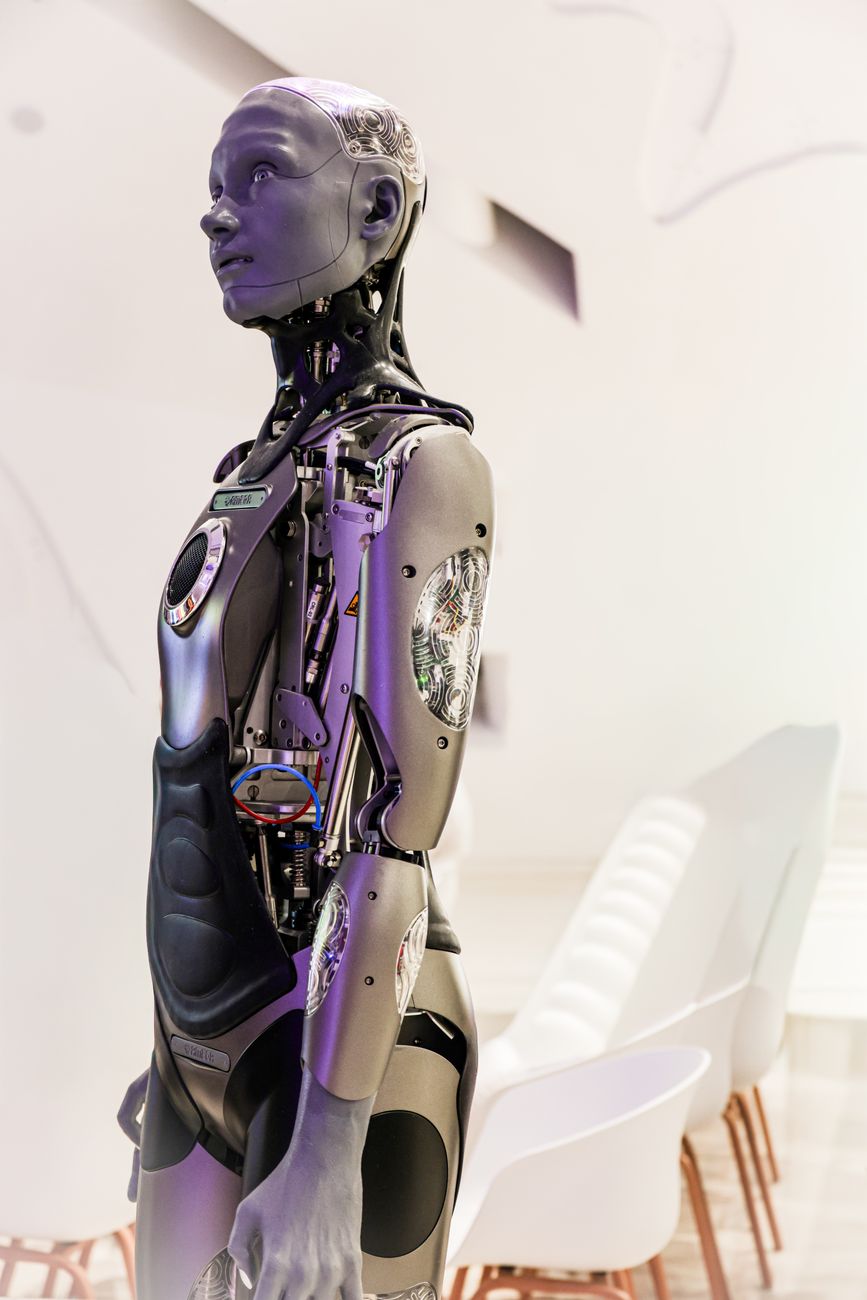
When Jensen Huang walked onstage at GTC Taipei in early June, he was not holding a GPU. The Nvidia chief executive stood beside a 6-foot-tall humanoid robot — a machine built around Nvidia’s Jetson Thor compute module, wrapped in a chassis from Chinese manufacturer Unitree, and designed to be the reference blueprint for an industry that barely exists yet.
Humanoid robots will bring physical AI to the world’s largest industries, opening a multitrillion-dollar economic opportunity.
— Jensen Huang, Nvidia
The moment crystallised a shift that has been building across Silicon Valley for 18 months: the AI capital cycle is pivoting from pure software to embodied machines. Global robotics and physical AI investment hit $US26 billion in 2025, up from $US4 billion in 2019, according to PitchBook data cited by Business Insider. Through the first half of 2026, investors have already deployed another $US23 billion ($34 billion). The same venture dollars that funded large language models are now chasing startups that build arms, legs and grippers.
Barclays projects the humanoid robotics market alone will swell from $US2–3 billion today to $US200 billion by 2035 — a 100-fold expansion that, if it materialises, would rival the growth of cloud computing. Zornitza Todorova, head of thematic FICC research at Barclays and co-author of a report titled AI Gets Physical, frames it as a decade-defining shift with a unit-economics caveat.
It’s the decade of the robot. The size of the market today is really small, it’s 2 to 3 billion dollars, but we see it going up to $200 billion in 2035.
— Zornitza Todorova, Barclays, via CNBC
The gap between $US3 billion and $US200 billion is not so much a forecast as a set of unresolved problems. A humanoid robot still costs roughly $US50,000 to manufacture in the West — about $US80,000 Australian. Barclays sees that falling to $US20,000 by 2030, but only if production volumes reach the tens of thousands. For context, Tesla’s Optimus robot is doing “simple tasks” at Tesla’s own factories, as Elon Musk has acknowledged, but the company pushed its public-sales target to the end of 2027.
Nvidia’s strategy is transparent to anyone who watched the company build CUDA. The Isaac GR00T Reference Humanoid Robot bundles the Unitree H2 Plus chassis, Sharpa dexterous hands, Jetson Thor compute, and the full Isaac GR00T software stack — teleoperation tools, simulation environments, foundation models and ROS middleware — into a single integrated system. Unitree plans to sell it from late 2026 at what Spencer Huang, Nvidia’s director of product for robotics, described to Wired as “$15K-like” pricing.

The intent is not to build robots at scale. It is to make Nvidia’s silicon and software the default stack for every humanoid company, the way CUDA became the default for AI training. “We want to provide our silicon smarts for as many humanoid companies as possible,” Spencer Huang told Wired. Whether the Isaac GR00T platform achieves CUDA-level lock-in or becomes one of several competing stacks depends on adoption by the dozens of startups now scrambling for standardised hardware.
That hardware question runs straight into geopolitics. China produces humanoid robots at roughly half the Western unit cost, according to the Barclays report. Chinese manufacturers accounted for 85 per cent of global humanoid robot installations in 2025 and operate about 300,000 industrial robots compared to 34,000 in the United States. Unitree’s G1 humanoid already sells for about $US15,000.
Nvidia’s partnership with Unitree — an American brain in a Chinese body — embodies the tension. Last week the Pentagon blacklisted Unitree, along with Alibaba, Baidu and BYD, as companies that support China’s military. US lawmakers have separately proposed banning Chinese-made humanoid robots from government use and critical infrastructure. Gavin Kenneally, chief executive of Ghost Robotics, told Wired the field risks repeating the DJI playbook — where Chinese manufacturers dominate a strategic hardware category while US policy debates catch-up measures. “If we don’t have a national robotics strategy,” Kenneally said, “we’re going to wake up in five years and every robot in an American warehouse will be running Chinese hardware.”
Behind the hardware question sits a quieter but harder problem: training data. Large language models had the internet. Robots have nothing comparable — every grasping motion, every navigation decision, every delicate manipulation has to be learned from physical experience, and that experience is expensive to collect at scale. The workarounds are inventive. Shift Robotics, a San Francisco startup, offers free apartment cleaning in exchange for egocentric video data — 8 million views and 14,000 operators so far. In China, JD.com is planning a 500,000-person data-collection neighbourhood that would generate 10 million hours of training footage, Rest of World reported. It is the kind of low-cost, at-scale data harvesting that gives Chinese firms a structural advantage over the research-heavy, outsourced US approach.
Alan Fern, a robotics professor at Oregon State University, cautioned against assuming that scaling laws proven in language will transfer cleanly to physical tasks. The thesis that more data alone produces generally capable robots remains unproven, Fern told Wired, and the gap between controlled demos and the chaotic variability of real-world environments is wider than the hype cycle suggests.

The debate over whether humanoids can do real work is about to get its first real test. Figure AI, valued at $US39 billion after a $US1 billion Series C, signed a commercial agreement with Catalyst Brands — the parent of JCPenney, Aéropostale and Brooks Brothers — to deploy humanoid robots at a distribution logistics centre in Reno, Nevada. It is a modest start: a single site, a defined task set, a controlled environment. But it marks the first time a well-capitalised humanoid company has moved from demo to deployment with a paying customer. Agility Robotics’ Digit robot is already working in Amazon and GXO warehouses. Hyundai plans to deploy tens of thousands of Boston Dynamics Atlas humanoids by 2028.
OpenAI, which abandoned its robotics division in 2021 to focus on language models, has reversed course. Sam Altman declared robotics the company’s next frontier in a post on X in February, and OpenAI has since rebuilt its robotics team, hiring engineers from Tesla, Boston Dynamics and academic labs.
In the short term, we are focused on robots to support skilled workers to build our future infrastructure; in the long term, we imagine everyone having a personal robot doing anything they need.
— Sam Altman, OpenAI, via Business Insider
Meta has also been hiring humanoid robotics talent, and Tesla’s Optimus programme — the longest-running among the big tech efforts — continues to iterate at its Fremont factory. The framing is consistent across every major player: industrial deployment first, consumer robots later. Nobody is promising a Rosie the Robot in your living room by 2028. The timelines are measured in factory floors, not home kitchens.
The physical AI race is still in its infrastructure phase — the equivalent of laying fibre before the broadband boom. Nvidia is selling shovels. Figure AI and Agility are digging the first holes. China is building cheaper shovels. And the policy framework that will govern where those shovels came from, and who gets to use them, is being written in real time. Whether the $US200 billion forecast proves accurate or becomes the latest in a long line of robotics hype cycles will depend less on the technology — which is advancing faster than even optimists predicted — than on whether the unit economics, the training data and the geopolitics can align before investor patience runs out.

Asha Iyer
AI editor covering the model wars, AU enterprise adoption, and the policy shaping both. Reports from Sydney.