AI infrastructure spend hits $US765b capital test
AI infrastructure spending is pulling Alphabet, SpaceX and Oracle into fresh equity and debt as investors test a $US765b build-out.
In the race to dominate artificial intelligence, the largest technology companies are starting to behave less like software firms and more like capital projects. Alphabet, SpaceX, Oracle and Amazon are asking investors and lenders to help fund data centres, power links and specialised compute after years in which the biggest platforms could largely finance expansion from cash flow.
Numbers this large change the frame. Goldman Sachs estimates AI infrastructure spending will reach $US765 billion (about $1.17 trillion) in 2026 and $US7.6 trillion (about $11.6 trillion) through 2031. Reuters has reported that Alphabet plans an $US80 billion equity raise, with Berkshire Hathaway putting in $US10 billion (about $15.3 billion), while SpaceX is seeking as much as $US75 billion (about $115 billion) in a listing that would value it near $US1.77 trillion (about $2.71 trillion).
Here is the shift. AI demand still looks real, but the funding model is changing first. By the third paragraph of the story, Steven Kaplan’s dot-com comparison starts to matter because the market is being asked to underwrite the build-out before the returns are fully visible.
“It feels very much like the late 1990s.”
— Steven Kaplan, University of Chicago Booth School of Business, quoted by The New York Times
Capital markets have become part of the stack
Alphabet’s financing plan is the clearest sign that the AI stack now includes public-market capacity alongside chips, models and cloud regions. CNBC reported that the company lifted its planned raise to about $US85 billion (about $130 billion) and forecast $US190 billion (about $291 billion) in 2026 capital expenditure as it races to add data-centre capacity.

Inside that plan is a finance team’s answer to an engineering problem. When model demand keeps outrunning available compute, a platform can slow product growth, ration capacity or raise outside capital. Alphabet chose the third path, even though it had about $US125 billion (about $191 billion) in cash on its balance sheet earlier this year, according to the research brief.
Sundar Pichai framed the constraint as operational rather than theoretical. CNBC quoted the Alphabet chief executive asking how the company should ramp up power, land and supply chains to meet an extraordinary demand moment.
“Be it power, land, supply chain constraints, how do you ramp up to meet this extraordinary demand for this moment?”
— Sundar Pichai, CNBC
From another angle, SpaceX is testing the same appetite. Reuters reported that the company is planning a record $US75 billion IPO at $US135 a share. SpaceX is not a conventional enterprise cloud vendor, but the xAI and compute-capacity narrative has pulled it into the same capital cycle as Alphabet, Meta, Amazon and Oracle.
The bottleneck is physical now
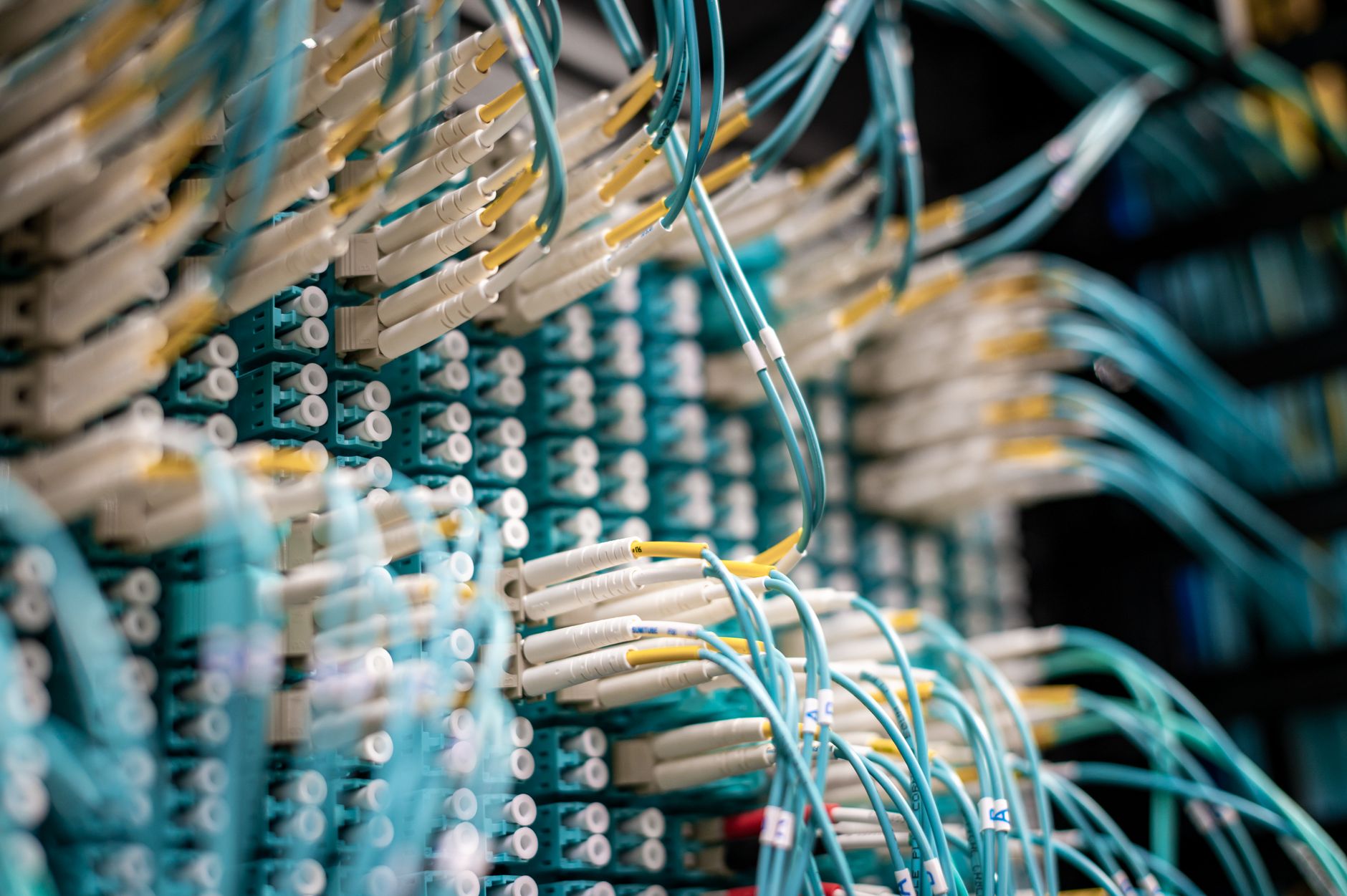
For enterprise technology buyers, the useful read is not only that AI companies need more money. Scarcity has moved down the stack. Models can be updated quickly. Data centres, substations, cooling systems, optical interconnects and grid crews cannot.
Reuters has separately reported that the data-centre rush is worsening shortages of power-grid workers. In Seattle, Amazon employees have asked local officials to pause new data centres, The Verge reported, citing concerns about power use and local planning pressure. New York lawmakers have advanced a one-year data-centre permit moratorium, according to The Register.
Such constraints turn AI scale into a delivery problem. A model provider may announce capacity plans in quarters; utilities, councils and construction contractors often work in years. Every delay creates an opening for rival clouds with spare capacity, and every local backlash raises the cost of adding the next megawatt.
Policy voices are not simply outside critics in this cycle. Local planners and grid operators now sit inside the capital story because permitting and transmission can decide whether borrowed money becomes usable compute. Compare that with the software era, when incremental demand could often be served by adding servers inside an existing region.
The late-1990s analogy has limits
Bubble comparisons are easy to overuse. They are still unavoidable when large technology companies sell stock, borrow heavily and ask investors to value future demand before the cash returns arrive.
Sceptics make a narrower case than simply saying AI demand is fake. Their argument is that the funding cycle can outrun the profit cycle. Business Insider reported that Michael Burry compared the AI boom with the dot-com bubble, arguing that valuations and narrative momentum were doing too much work. MarketWatch has made a similar point about Big Tech increasingly turning to equity and bond markets to fund what it described as an $US820 billion (about $1.25 trillion) AI build-out.
Cash flow complicates the analogy. Today’s largest AI spenders are not 1999-style pre-revenue start-ups. Alphabet, Microsoft, Amazon and Meta still throw off enormous operating cash. Berkshire Hathaway’s reported $US10 billion investment in Alphabet’s sale is not the typical signal of retail-market euphoria. It suggests at least some long-horizon investors see AI infrastructure as a utility-like asset, not only a speculative trade.
Even so, issuance changes incentives. Once the market rewards AI capacity spending with capital access, management teams can be pushed to keep building because stopping looks like surrender. Oracle’s latest quarter shows the tension. CNBC reported that Oracle beat earnings expectations, but the stock fell after investors focused on negative free cash flow and plans to raise another $US20 billion (about $31 billion) for data-centre projects.
The winners may be outside the model layer
A second-order trade is forming around the suppliers that make AI infrastructure possible. CNBC has reported on Corning’s multibillion-dollar AI deal with Amazon and Nvidia chief executive Jensen Huang’s comments on the importance of optics to the data-centre build-out. Marvell’s planned addition to the S&P 500 adds another example of infrastructure-adjacent names being pulled into the AI story.
Memory is another pressure point. Tom’s Hardware reported that an industry coalition warned the Trump administration that AI data centres’ memory consumption could tighten supply for automotive, medical and telecommunications users. If that warning proves right, the AI build-out will not be confined to cloud budgets. It will raise input costs in sectors that have little direct exposure to frontier models.
Australian enterprise buyers should read those shortages as procurement signals. Local CIOs may not be buying shares in Alphabet’s equity sale or SpaceX’s IPO, but they will feel the flow-through in cloud pricing, GPU access, data-residency options and the availability of specialist integrators. A global shortage in optics, memory or power equipment can show up in Sydney as a delayed migration project or a higher managed-service quote.
Amazon’s recent financing adds to that picture. TechCrunch reported that the company borrowed $US17.5 billion from banks after a bond sale as AI spending continued. Put simply, the cloud platforms are now funding AI capacity through the same channels used by infrastructure businesses: equity, bonds, bank facilities and long-term customer contracts.
What to watch next
Next comes the harder test: whether the raised capital becomes revenue-bearing capacity fast enough to satisfy investors without forcing customers into higher prices or lower service levels.
Three indicators will show whether the cycle is healthy. First, watch utilisation: data centres only justify this spending if expensive chips stay busy. Second, watch free cash flow: recurring AI revenue needs to arrive before debt and dilution become the main story. Third, watch permitting and power procurement, because local constraints can turn a well-funded project into stranded ambition.
For the enterprise market, the practical conclusion is measured rather than apocalyptic. AI infrastructure spending is moving from experimentation to heavy industry. That makes the market more durable in some respects, but less forgiving. Winners will not simply have the best model demo. They will have cheaper power, faster sites, deeper financing and customers willing to sign long commitments before the next capital raise comes due.

Soren Chau
Enterprise editor covering AWS, Azure, and GCP in the AU region, plus the SaaS shaping local IT. Reports from Sydney.