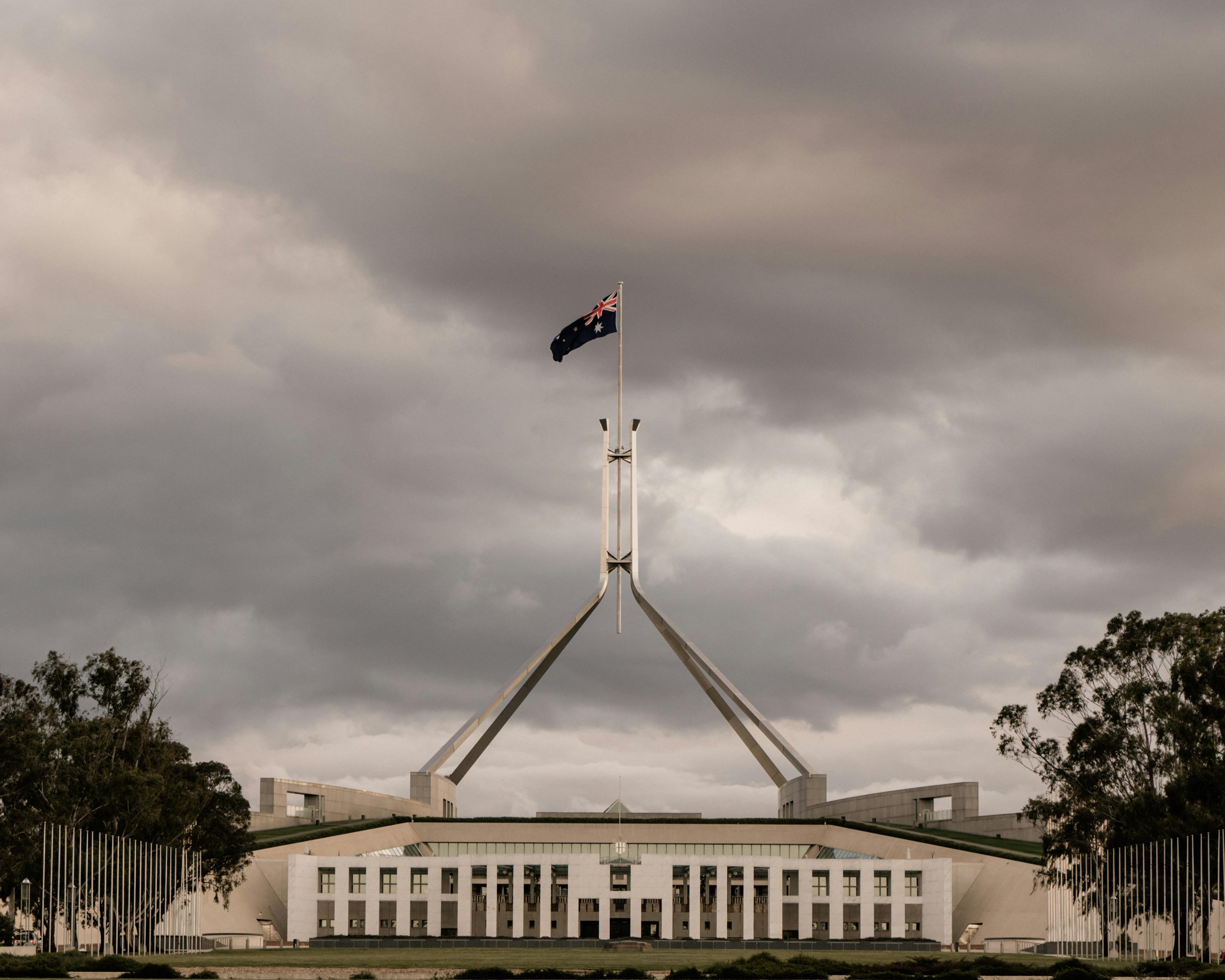
Australia drafts 2.25 per cent news levy for Meta, Google, TikTok
Canberra's draft bill taxes Big Tech 2.25 per cent of Australian revenue unless Meta, Google and TikTok strike deals with publishers. The structure removes the deplatform-the-news escape route Meta used in 2024 and lands as Trump weighs trade retaliation.
The Albanese government on 28 April 2026 released draft legislation for the News Bargaining Incentive, proposing a 2.25 per cent levy on the Australian revenues of Meta, Google and TikTok unless the platforms strike commercial deals with local news publishers. Communications Minister Anika Wells told a Canberra news conference the measure was designed to make the platforms pay one way or the other: negotiate deals with publishers, or pay a tax that the government redistributes to newsrooms based on staffing.
The levy would apply from the 2025-26 financial year, which starts on 1 July. It captures companies running a “significant” social media or search service in Australia with local revenue above $A250 million ($US179.3 million). The threshold is calibrated to land on three named targets. Artificial intelligence platforms are exempt, Wells said, because they are being regulated separately. The government plans to introduce the bill to Parliament by 2 July 2026.
“People are increasingly getting their news directly from Facebook, from TikTok and from Google, and we believe it’s only fair that large digital platforms contribute to the hard work of journalism that enriches their feeds and that drives their revenue,” Wells said. “Platforms should do deals with news organisations. If they decide not to, they will end up paying more.”
What the levy actually does
The 2.25 per cent rate is the unmitigated cost. Platforms can lower their effective bill by negotiating direct commercial agreements with Australian publishers, with bigger offsets attached to deals struck with smaller mastheads. Trade outlet Content + Technology summarised the structure as a 1.5 per cent floor for platforms that come to terms, scaling up to the full 2.25 per cent for those that do not. The government expects to raise between $A200 million and $A250 million ($US144 million to $US179 million) a year if the platforms refuse to negotiate. Wells said that money would be allocated to news organisations “based on how many journalists they employ”.
The drafting closes the loophole that hollowed out the 2021 News Media Bargaining Code. Under the older regime, Meta blocked Australian news links on Facebook and Instagram in 2024 rather than renew its expiring publisher deals, then walked away from arbitration. The new design taxes the platform on Australian revenue regardless of whether news content is hosted, removing the option to opt out by deplatforming journalism.
“The News Media Bargaining Incentive means that if a platform does not do a deal with a news publisher, the money will come to us and we will deliver that funding to news organisations based on how many journalists they employ,” Wells said. The structure follows the trail of similar enforcement work the Cyber Incident Review Board and recent ACCC tech enforcement have laid down. It is a deliberate move from voluntary frameworks to mandated levies that platforms cannot route around.
How big tech is responding
Meta rejected the framing outright. “The idea that we take their news content is simply wrong,” a company spokesperson said. “This proposed legislation, which would apply to platforms regardless of whether news content even appears on our services, is nothing more than a digital services tax.” Meta added that the design would create “a news industry dependent on a government-administered subsidy scheme” rather than a commercial market.
Google was equally blunt. “We reject the need for this tax,” a Google spokesperson said. “It ignores the fact that Google already has commercial agreements with the news industry, misunderstands how the ad market changed and mandates payments from some companies while arbitrarily excluding platforms like Microsoft, Snapchat and OpenAI, despite the major shift in how people consume news.” TikTok declined to comment.
The platforms are pushing the digital-services-tax framing for a reason. It lines up the policy with the category Donald Trump’s administration has explicitly threatened tariffs against. Asked whether the government had factored in possible US retaliation, Prime Minister Anthony Albanese replied: “We are a sovereign nation. And my government will make decisions based upon the Australian national interest.” On a separate question about journalists’ work, he added that monetary value “shouldn’t just be able to be taken by a large multinational corporation and used to generate profits for that organisation with no compensation appropriate for the people who produce that creative content”.
The Trump factor
The Australian timing is awkward. Trump has spent the last quarter publicly criticising Canberra for declining to join US naval operations around the Strait of Hormuz. “I’m not happy with Australia because they were not there when we asked them to be there,” he told reporters in April. The same month, his administration formally objected to digital services taxes adopted by other US trading partners.
In a Guardian column published on 5 May 2026, US Studies Centre senior fellow Bruce Wolpe argued the platforms are well-placed to convert that displeasure into trade pressure. Wolpe pointed to Meta’s $US600 billion US technology and AI infrastructure commitment, Google’s $US68 billion data-centre programme, and Oracle’s effective control of TikTok’s algorithm under Larry Ellison as evidence of how directly each company sits inside Trump’s industrial agenda. Confirmation hearings for the next US ambassador to Australia, David Bart, are expected to feature questions on the levy, Wolpe wrote.
Wolpe drew the parallel to the playbook used against Australia’s Pharmaceutical Benefits Scheme, in which US pharmaceutical companies have pushed successive administrations to treat the scheme as a non-tariff barrier. “Trump’s disdain for media is good news for the tech bros as they prepare to kill off the media tax proposals,” Wolpe wrote.
Why the design names TikTok
Including TikTok alongside Meta and Google says something about the policy’s intent. TikTok’s Australian advertising revenue is approaching $A1 billion and rose roughly 30 per cent year on year, according to financial filings reported by The Sydney Morning Herald’s David Swan on 4 May 2026. In the same period, TikTok’s Australian entity sent $A458 million to a related TikTok-group company domiciled in the Cayman Islands as payment for ad inventory. It transferred a further $A169 million through what filings described as a “cash pooling arrangement”. Treating TikTok as a tax target, rather than a regulatory afterthought, follows the revenue base.
That structure also explains why the threshold sits at $A250 million. It is high enough to keep the levy off mid-tier platforms that publishers do not depend on, but low enough to capture every entity actually competing for Australian display-advertising spend. The exclusion of “AI platforms” from this regime does similar work. The government wants to keep the bargaining policy clean of any direct collision with the parallel work it is doing on the AI.gov.au platform launched by the National AI Centre.
What the publishers say
A joint statement from the executives of Nine Entertainment, public broadcaster ABC and News Corp Australia called the draft “a critical step toward securing the future of Australian news”. “If digital platforms fail to pay for the use of the news content from which they profit, then journalism becomes unsustainable,” they said.
Smaller publishers are watching the offset structure closely. Wells confirmed that “the platforms would get bigger offsets for deals struck with smaller organisations”, a design choice that pushes platforms to spread agreements across the masthead market rather than concentrating on the three legacy houses. The Nieman Lab analysis published on 5 May 2026 questioned whether the government would actually deploy the funding as quickly as it raises it. That answer becomes clearer only when the bill clears Parliament and the first allocations are made.
What happens next
The draft is now open for industry consultation. The government has flagged 2 July 2026 as its target to introduce the legislation to Parliament, with the levy backdated to apply from 1 July. Wells confirmed the levy itself begins from the 2025-26 financial year regardless of when the bill clears. That gives the platforms a narrow window to negotiate deals before the tax falls due. The first commercial agreements struck under the new framework will set the going rate for the offsets that follow.
The previous bargaining code lasted three years before Meta walked. The mechanism this time around does not depend on platform participation, only on Parliament passing a tax. Whether Trump’s administration treats that as a digital services tax, and whether Albanese’s government holds the line if it does, is the question now in front of Canberra.

Marnie Blackwood
Regulation reporter on Privacy Act reform, eSafety, ACCC tech enforcement, and ACMA. Reports from Canberra.