OneDrive's Australian enterprise lock-in: pricing, privacy, and the Copilot tax
Microsoft 365 Personal costs $AU159/year in Australia with 1TB of OneDrive storage. But the platform's lack of zero-knowledge encryption and the cost of Copilot integration raise hard questions for enterprise IT buyers.
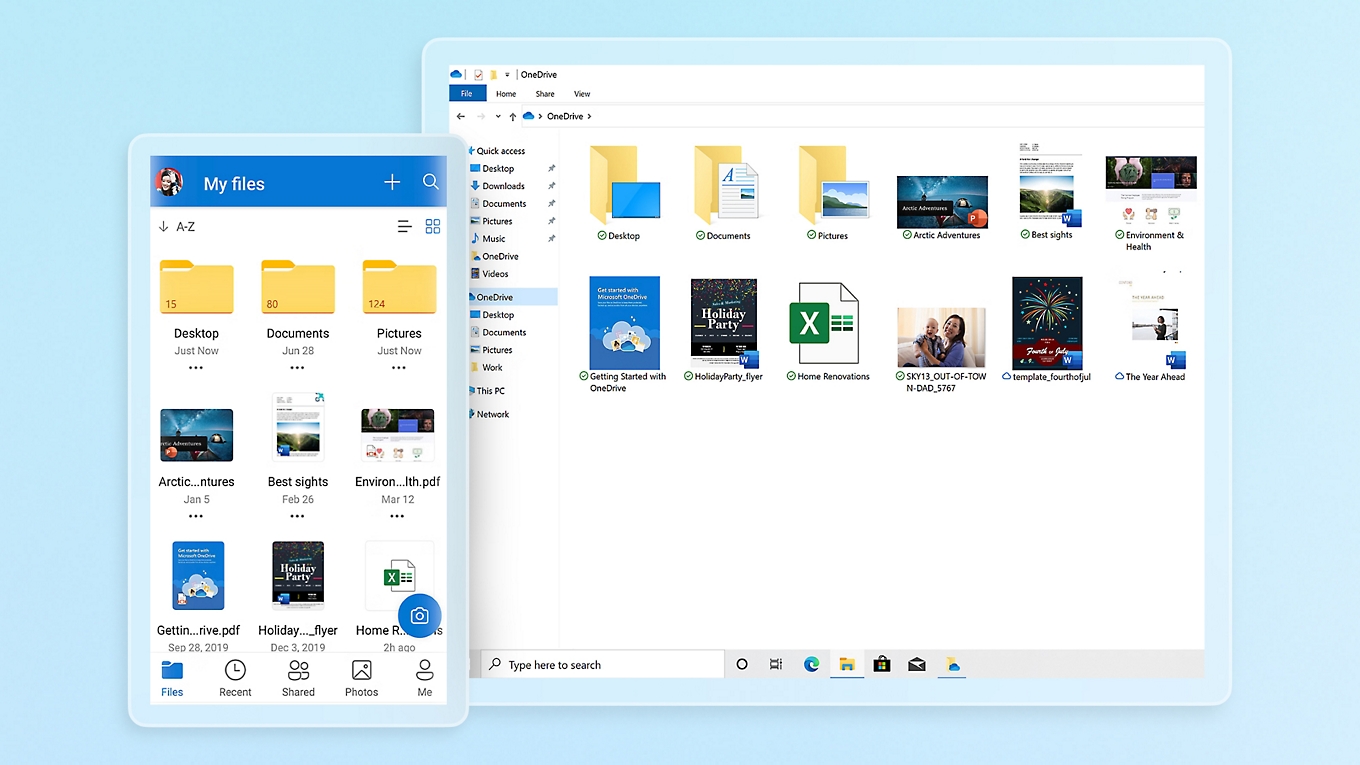
Microsoft 365 Personal costs $AU159 yearly in Australia. Subscribers receive the Office desktop suite — Word, Excel, PowerPoint, Outlook — with 1 terabyte of OneDrive cloud storage included. The sync client ships pre-installed on every Windows 11 machine sold in Australia. The Family plan, priced at $AU179, extends the same 1 TB allowance to six people.
That price has held steady since at least 2022. Anyone who needs Office and wants files available across devices without manual syncing finds the math straightforward. PCMag Australia’s 2026 review described OneDrive as “more than just the default cloud storage and syncing option for Windows PCs,” noting polished apps across platforms. Dropbox Professional costs $AU26 monthly for 3 TB without an office suite. Microsoft’s bundle costs less for both components combined.
The default status hides questions Australian IT buyers increasingly face. OneDrive lacks zero-knowledge encryption. Microsoft developers and, if compelled by law, United States government agencies can access stored data. The terms make this explicit.
Australian Privacy Principle 8 governs cross-border disclosure of personal information. The gap between data sitting in an Australian data centre versus being inaccessible to anyone but the customer separates compliance theatre from actual assurance. In 2025 the OAIC signalled it would treat inadequate contractual protections for offshore data access as a breach of APP 8, not a policy gap. Enterprises storing client data in OneDrive without a supplementary encryption layer face a concrete cost from that signal.
Microsoft began storing Microsoft Entra customer data for tenants with Australian or New Zealand billing addresses inside Australian data centres from February 2020. Specifically: the Azure Australia East and Australia Southeast regions. That commitment covers identity data, not all customer content. Yet enterprises running SharePoint, Exchange, and Teams through Microsoft 365 store OneDrive files alongside those services in AU-located infrastructure. The data-at-rest question is settled. Data access remains unresolved.
Permission drift adds complexity. Sydney-based AI Avenue analysed in 2025 and found that before rolling out Microsoft 365 Copilot — the AI assistant indexing an organisation’s entire Microsoft Graph, including OneDrive files — roughly 15 per cent of business-critical files carried inappropriate permission settings.
An AI tool can surface an HR spreadsheet left open to “everyone except external users” in response to a natural-language prompt. A manageable governance headache becomes an audit emergency. Mid-market firms get caught most often — those that grew organically without a SharePoint architect designing folder structure, and without the IT staff to fix permissions when the Copilot invoice arrives.
AI Avenue estimates the year-one total cost of a 100-person Copilot deployment in Australia at between $AU116,000 and $AU181,000. That covers licensing, governance tooling, training, and permission remediation. The Copilot add-on costs $AU44 to $AU50 per user per month through the Copilot Business tier, per Code Hyper One’s 2025 pricing analysis.
This is the Copilot tax. A second line item layered on a subscription that already includes OneDrive, forcing organisations to audit permissions before the tool delivers value. Businesses nobody asked to prepare get hit hardest — firms that never ran permissions hygiene because budgets didn’t require it, and now face six-figure remediation bills before activating AI features they’ve already purchased. For them, Copilot isn’t a productivity unlock. It’s an unbudgeted compliance project wrapped in marketing language about AI transformation.
Windows users find OneDrive setup frictionless. It is already installed. Signing in with a Microsoft account activates Known Folder Move, redirecting Desktop, Documents, and Pictures into the OneDrive sync directory automatically. macOS users access the client through the Mac App Store with Finder integration — less deep than Windows, but functional. Linux users have a web interface and a third-party client maintained by the open-source community. Microsoft has never shipped a native OneDrive sync client for Linux and has given no public indication of plans to do so. The cross-platform reality is Windows-first, Mac-second. Linux users remain on community-maintained clients with no official support path.
Australian business pricing beyond consumer plans spans three tiers. Microsoft 365 Business Basic costs $AU9.40 per user per month, includes 1 TB of OneDrive storage, and provides only web and mobile Office versions. Business Standard adds $AU9.40 for desktop apps. Business Premium costs another $AU10.90 and layers on Azure Information Protection and Microsoft Defender for Office 365 — security features that become essential for businesses storing sensitive client data in OneDrive when the privacy architecture lacks zero-knowledge encryption. Enterprise E3 and E5 plans offer unlimited storage for organisations above five users on E3.
Google Workspace Business Standard moved while OneDrive stood still. Google’s plan costs $AU16.80 per user per month with 2 TB of pooled storage per user. Google’s enterprise AI pricing, through Gemini for Workspace, follows a similar per-seat add-on model at roughly $AU30 per user per month. Dropbox Business Advanced offers unlimited storage at $AU32 per user per month. PCMag Australia’s review rates its sync engine above OneDrive for pure file synchronisation. Dropbox lacks an office suite and AI assistant integration, making it a second subscription alongside Microsoft 365 rather than a replacement. Proton Drive costs roughly $AU15 per month for 500 GB and provides the zero-knowledge encryption OneDrive lacks, yet offers no real-time collaboration tools. That limits it to privacy-first users who don’t need co-authoring.
Australian IT buyers weigh a bundling equation, not feature comparison. If an organisation already pays for Microsoft 365 — and most do — using OneDrive adds no marginal cost. Switching to a third-party cloud storage provider means paying for a service already included in the existing subscription. The financial case for unbundling requires a specific, articulated risk — regulatory non-compliance, a board directive on data sovereignty, or an upcoming Copilot deployment that indexes every file in the tenant. Most organisations leave the question unexamined. The risk stays below the procurement threshold until something forces it above.
OneDrive provides good storage. Office integration is better. The privacy architecture is fixed, and the Copilot era turns a theoretical risk into a concrete IT budget line item. Whether that line item warrants payment depends on what sits in your OneDrive folders — and who else might read them.

Soren Chau
Enterprise editor covering AWS, Azure, and GCP in the AU region, plus the SaaS shaping local IT. Reports from Sydney.