Jassy at Five Years: Inside Amazon's $200 Billion AI Overhaul
Five years into Andy Jassy's tenure as Amazon CEO, a leaner, more disciplined company has placed a $200 billion bet on AI infrastructure — a shift with direct implications for the Australian enterprises that run on AWS.
Jassy at Five Years: Inside Amazon’s $200 Billion AI Overhaul
Five years after taking the reins from Jeff Bezos, Amazon chief executive Andy Jassy has left an unmistakable imprint on the company: roughly 57,000 corporate jobs eliminated, a string of projects killed, and a $200 billion capital expenditure programme aimed at making Amazon the dominant infrastructure provider for the artificial intelligence era. A Bloomberg profile published this week lays out the picture — a CEO who has replaced the freewheeling experimentation of the Bezos years with harder-edged discipline, placing a single concentrated bet on AI.
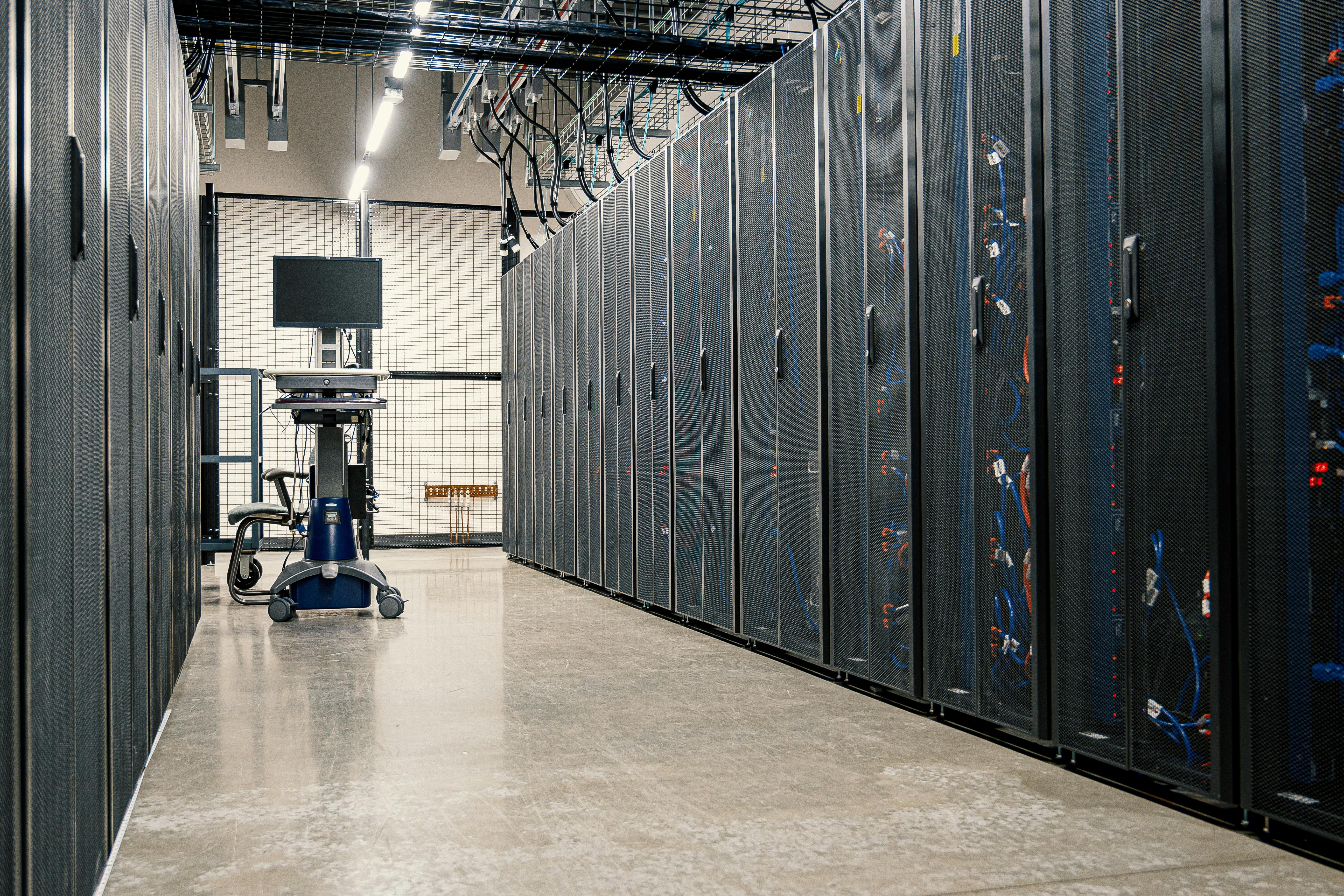
Australian enterprises cannot afford to treat Jassy’s strategic overhaul as a distant corporate story. Amazon Web Services remains the dominant cloud platform in the local market, operating regions in Sydney and Melbourne and investing a further $A20 billion in Australian data centre infrastructure between 2025 and 2029 — the largest technology investment commitment in the country’s history, announced by Prime Minister Anthony Albanese in 2025. Decisions made in Seattle shape the product roadmaps, pricing, and architectures available to Australian banks, government agencies, and software firms that have built their operations on AWS.
Cost discipline, the hallmark of Jassy’s tenure, arrived early and cut deep. During 2022 and 2023, Amazon eliminated roughly 27,000 corporate roles — at the time the largest layoffs in company history — and followed with a further 30,000 cuts across 2025 and 2026, according to an analysis by CRN published in March. Jassy also introduced a “bureaucracy mailbox” that fielded more than 1,500 employee complaints about process bloat, yielding 450 organisational changes. Return-to-office mandates and a shift to what the company calls “horizontal development” — lateral moves replacing traditional upward progression — have reshaped the internal culture, Fortune reported in a 2024 examination of whether Bezos-era leadership principles could survive the Jassy era.
“One of the things I’ve tried to do as CEO is kill things that aren’t going to work,” Jassy told Bloomberg. Among the casualties: Amazon Care, the company’s telehealth venture; Glow, a video-calling device for children; and a series of internal AI projects that failed to clear a higher bar for return on invested capital.
What survived — and expanded dramatically — is the bet on AI infrastructure. Amazon’s 2026 capital expenditure of $US200 billion ($A312 billion) represents a 52 per cent increase from the $US131.8 billion it spent in 2025, CNBC reported. The outlay spans custom silicon — the Trainium and Graviton chip families, now generating more than $US20 billion in annual revenue run rate and growing at triple-digit rates year on year — alongside data centre construction and the Amazon Bedrock platform, which gives enterprises access to large language models from Anthropic, Meta, and Amazon’s own Nova family.
Rather than framing the spending as a speculative gamble, Jassy casts it as a replay of the company’s most successful strategic decision. “When you have shifts that are this momentous, you want to bet big,” he said in a shareholder communication published by About Amazon. “We’ve lived this movie once before in the first wave of AWS.”
Early returns offer some backing for the comparison. AWS AI revenue reached a $US15 billion annual run rate in the first quarter of 2026, Jassy disclosed in his most recent shareholder letter — a figure he noted was 260 times larger than AWS itself at the equivalent point in its lifecycle.
Wall Street has not uniformly bought the thesis, however. GeekWire columnist Todd Bishop captured the sceptical case in a recent analysis, calculating that the $US200 billion spend would require more than $US260 billion in incremental revenue to deliver acceptable returns. Amazon’s debt issuance has surged roughly sixfold, and the company is projecting negative free cash flow in 2026. “We’re not going to be conservative in how we play this — we’re investing to be the meaningful leader, and our future business, operating income, and FCF will be much larger because of it,” Jassy told CNBC in April.
Competitive positioning sharpens the stakes further. Microsoft has committed roughly $US80 billion to AI infrastructure over a comparable period, while Google has earmarked approximately $US75 billion. Amazon’s bet is larger than both combined, and Jassy’s insistence that this is not a “quixotic top-line grab” reflects a conviction — shaped by his two decades inside AWS — that infrastructure scale, once achieved, becomes a durable moat. Critics counter that the generative AI stack is less sticky than the IaaS layer that made AWS dominant: large language models are more portable than virtual machines, and enterprises can switch model providers with far less friction than they can migrate petabytes of data. Whether Amazon’s custom silicon strategy — Trainium for training, Inferentia for inference — can build the same kind of lock-in that x86 EC2 instances once delivered remains an open question.
Australian enterprise technology leaders face tangible and immediate stakes. The $A20 billion Amazon has committed to local data centre expansion will deepen AWS’s physical footprint across Sydney and Melbourne and is expected to support thousands of construction and ongoing technical roles. Broader Australian public cloud spending is forecast to surpass $A33.6 billion in 2026, according to Computer Weekly, with AWS holding the largest share among hyperscale providers. Organisations from the major banks to federal government departments have migrated core workloads to AWS over the past decade, and the switching costs — in engineering time, retraining, and architectural rework — make near-term multi-cloud diversification more aspirational than practical for most.
Canberra is actively debating data sovereignty at the same moment this investment lands. The Digital Transformation Agency has tightened its hosting certification programme, and several state governments now require sensitive citizen data to remain onshore. AWS’s local region expansion addresses those requirements directly, giving the company a regulatory argument to match its scale argument when competing for government contracts against Microsoft Azure and Google Cloud.
Beyond the capacity expansion, Australian chief information officers should track the product direction Jassy’s AI-first posture is accelerating. Bedrock is being positioned as the neutral layer in a multi-model enterprise AI stack — a pitch that resonates with regulated Australian industries such as banking and healthcare that cannot tie their infrastructure to a single model provider. Meanwhile, the Trainium chip programme signals that AWS intends to compete on inference cost as aggressively as it once competed on storage and compute pricing, a development that could meaningfully shift the unit economics of enterprise AI deployments in the local market. AWS’s local headcount has grown from roughly 2,000 to more than 5,000 during Jassy’s tenure, and the company now counts every major Australian bank and the top four insurers among its reference customers.
Jassy, who built AWS from a small internal project into the world’s dominant cloud platform before becoming Amazon’s CEO in July 2021, has been explicit that this moment echoes the company’s earlier transformation. “This isn’t some sort of quixotic top-line grab,” he told CNBC in February. “We have confidence that these investments will yield strong returns on invested capital.”
Whether AWS remains the default cloud provider for the Australian market is not the real question — it will, barring a regulatory intervention from the ACCC, which is midway through a multi-year inquiry into digital platform services and has already signalled interest in cloud switching barriers. The sharper question is whether the platform that emerges from Jassy’s $200 billion overhaul serves enterprise buyers or has been reshaped primarily around Amazon’s own AI ambitions. Five years in, Jassy’s Amazon is more focused, more ruthless with underperforming assets, and more concentrated around a single strategic thesis than the company he inherited. Australian IT leaders are along for the ride whether they chose it or not.

Soren Chau
Enterprise editor covering AWS, Azure, and GCP in the AU region, plus the SaaS shaping local IT. Reports from Sydney.