Nvidia's China AI Chip Sales at Zero Despite US Clearance for 10 Firms
Not a single H200 AI chip has been delivered to China despite US approval for roughly 10 firms to buy them, US Commerce Secretary Howard Lutnick confirmed, as Beijing steers investment toward domestic semiconductor alternatives.
Nvidia’s China AI Chip Sales at Zero Despite US Clearance for 10 Firms
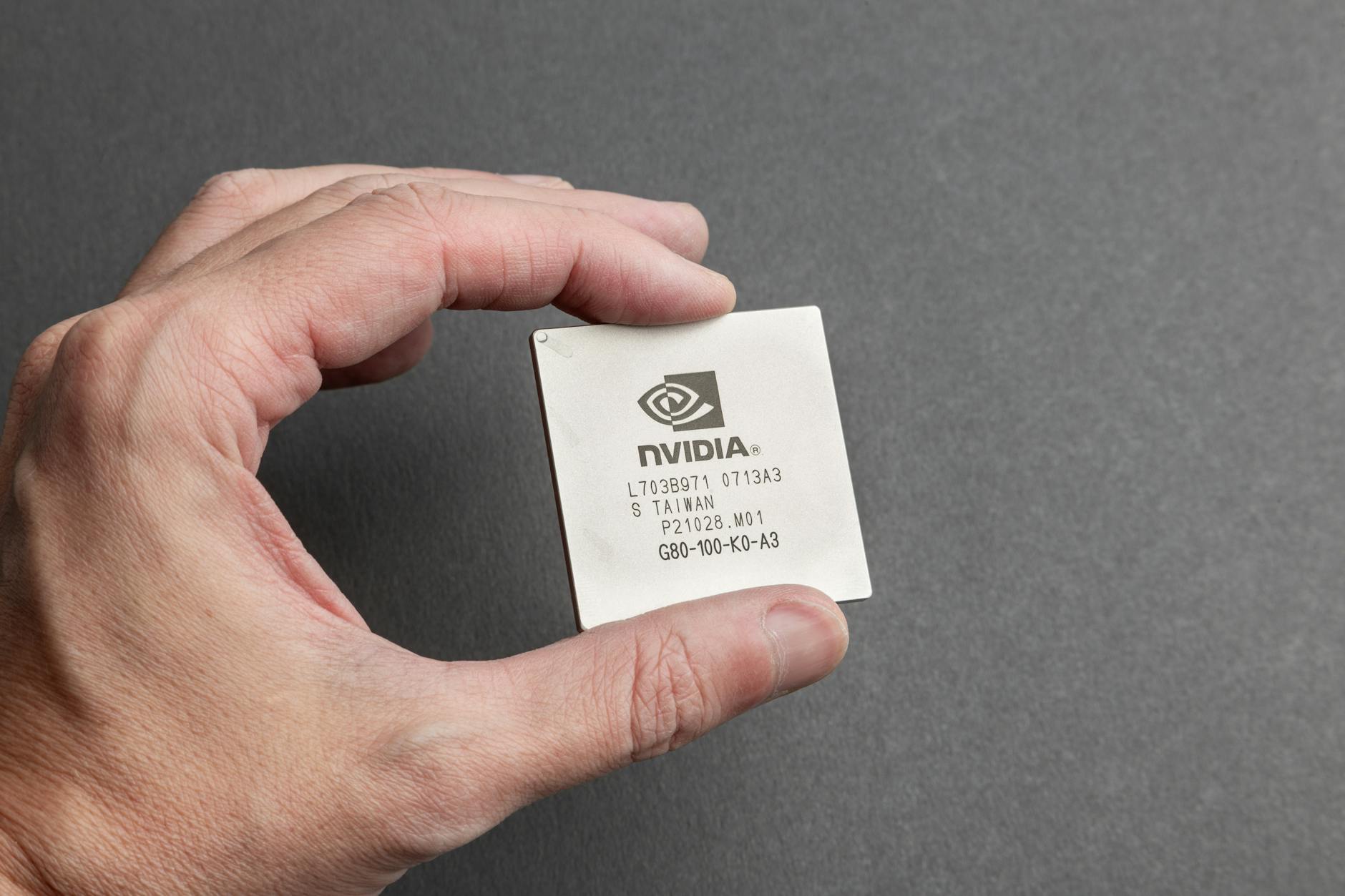
Zero. That is how many of Nvidia’s (NASDAQ: NVDA) H200 artificial intelligence chips have reached China since the US Commerce Department cleared roughly 10 Chinese companies to buy them, officials confirmed this week.
The approved firms include Alibaba, Tencent, ByteDance and JD.com, along with distributors Lenovo and Foxconn, each licensed for up to 75,000 units under the export framework unveiled after the Trump-Xi summit in Beijing. Not a single shipment has moved, Commerce Secretary Howard Lutnick said on Thursday. The licences were the first easing of chip export controls since the US began restricting sales of advanced semiconductors to China in October 2022.
“The Chinese central government has not let them, as of yet, buy the chips, because they’re trying to keep their investment focused on their own domestic industry,” Lutnick told reporters. US Trade Representative Jamieson Greer gave an equally blunt assessment. “The decision on whether to buy the H200 is going to be a sovereign decision for China,” Greer said.
Nvidia chief executive Jensen Huang joined President Donald Trump’s delegation to the Beijing summit this week in an attempt to convert the licences into purchase orders. The trip, which included a visit to the Temple of Heaven alongside Trump and Chinese President Xi Jinping, produced no breakthrough on semiconductor trade.
Beijing’s reluctance reflects a multi-year push to build a domestic chip industry capable of reducing reliance on US-designed processors. Huawei, the Shenzhen-based technology giant, has been positioned as the primary beneficiary of that strategy. Its Ascend series of AI processors is increasingly pitched to Chinese cloud providers as an alternative to Nvidia hardware, and the central government has directed state-backed enterprises to prioritise domestic suppliers where possible. Industry analysts note that while Huawei’s chips still trail Nvidia on raw performance, the gap has narrowed considerably in the past 18 months.
Nvidia shares closed at $US235.74 on Wednesday, down 0.89 per cent, giving the company a market capitalisation of $US5.71 trillion. The chipmaker trades on a trailing price-to-earnings ratio of 48.1 against annual revenue of $US215.9 billion. China once accounted for roughly 13 per cent of Nvidia’s revenue but has fallen to about 5 per cent under successive rounds of US export controls. The full H200, designed for data centre AI workloads, would be Nvidia’s most capable chip sold to Chinese customers since the original restrictions took effect. A 25 per cent US government levy applies to any H200 sales to China that do proceed, further complicating the economics for Chinese buyers who must also navigate licence conditions.
Chris McGuire, a senior fellow at the Council on Foreign Relations, warned that the trade carries strategic risk for the United States even if shipments eventually resume. “Any deal that allows Nvidia to sell more chips to China means fewer Nvidia chips for US firms, and a smaller US lead in AI over China,” McGuire said.
For Australian data centre operators and AI infrastructure providers, the stalled shipments expose the fragility of the global chip supply chain that underpins the country’s growing compute capacity. Australian cloud regions operated by Amazon Web Services, Microsoft Azure and Google Cloud rely on Nvidia hardware to power GPU-accelerated workloads. The nation’s publicly funded AI research clusters, including the National AI Centre’s compute programs, depend on the same supply chain. A prolonged disruption to Nvidia’s China pipeline is unlikely to affect Australian supply directly, but it adds uncertainty to a market already strained by surging global demand for AI accelerators.
The Trump-Xi summit concluded with no formal agreement on semiconductor trade, leaving the H200 pipeline frozen. With Beijing signalling that self-sufficiency remains the priority, the world’s most valuable chipmaker may have won the regulatory approval it spent years lobbying for. It has not won the customer it came for.

Asha Iyer
AI editor covering the model wars, AU enterprise adoption, and the policy shaping both. Reports from Sydney.