AI companion robots enter Australian aged care in 2026
AI companion robots are moving into Australian aged care as providers test whether machines can ease loneliness without replacing carers.
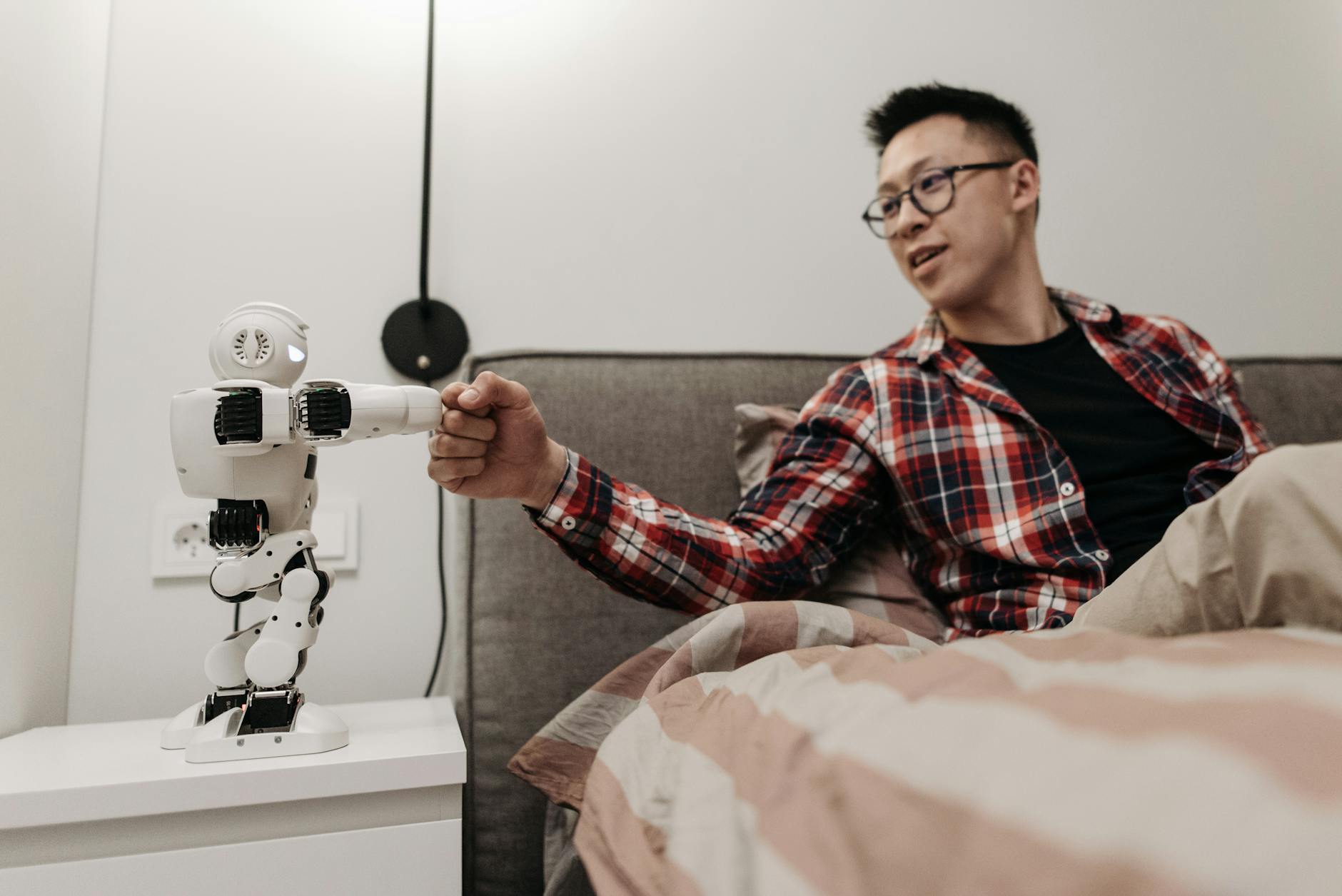
Australian aged-care providers are no longer just talking about AI companion robots. They are beginning to deploy them at a scale that makes the category harder to dismiss as a conference-floor demo. mecwacare’s rollout of 22 Abi units across its Victorian residential homes is the clearest local signal so far, with the provider and Andromeda Robotics saying the deployment will reach more than 1,500 residents in a sector facing a projected 110,000-worker shortfall by 2030, according to the April deployment announcement.
Care operators are choosing their words carefully. Abi is not being sold as a nurse, a substitute family member or a cheaper carer. Instead, the pitch is a social layer: a conversational robot that can prompt activities, speak multiple languages and give staff another way to engage residents who may be isolated between visits. In aged care, Australia’s wider AI adoption debate stops being abstract. A chatbot mistake in an office is one thing. A machine built to comfort a lonely resident is another.
From trial object to care-home fixture
Whether Abi still counts as a pilot is now the wrong question. The mecwacare deployment suggests the answer is shifting. Andromeda Robotics says the companion can hold conversations, support routine engagement and speak 90 languages, a feature set pitched directly at residential care homes with culturally diverse residents through the company’s Abi product page.
“We designed Abi to address the real and growing problem of loneliness and social isolation.”
Grace Brown, Andromeda Robotics
Brown’s line, carried in the mecwacare announcement, is the industry’s strongest argument and its biggest risk. Loneliness is real. Even diligent staff, family visits and activity programmes cannot remove every empty hour in residential aged care. Used carefully, a robot that nudges a resident into conversation or a group activity may fill one of those gaps rather than replace a human encounter.
Providers will have to defend that distinction. mecwacare chief executive Anne McCormack said Abi would become part of the care team, not stand outside it as a novelty. Operationally, the claim is that a robot can handle repeatable engagement tasks while carers focus on personal care, clinical escalation and the messy work of human connection. The attraction is obvious in a labour-constrained sector.
Still, the argument can be overstated quickly. No humanoid device will smile its way through Australia’s aged-care workforce shortage. A narrower test is more useful: whether a companion robot can help staff notice mood changes, prompt participation and reduce stretches of silence without becoming a management excuse for leaner rosters.
The evidence gap is now the story
Scrutiny is warranted because companion robots do not obviously fail. Early accounts suggest some older adults engage with them. The Verge’s recent hands-on with ElliQ, a home companion robot for older adults, described a device that prompted exercise and routine in ways that mattered to one family. That is not proof of long-term clinical value, but it helps explain why families and providers keep testing the idea.
Australian researchers have been here before. Social robotics professor Wendy Moyle, quoted in Guardian reporting on the local aged-care robot sector, has argued that robots can free carers for more human work while warning against fantasies of substitution.
“You’ll never get rid of humans.”
Wendy Moyle, Griffith University
Any Australian rollout should start from that baseline. If Abi works, it will work as infrastructure around care, not as care itself. A morning prompt to attend an activity may help. Multilingual conversation may reduce friction for a resident whose first language is not English. Staff might value an alert that a resident seems withdrawn, provided someone acts on it. None of those outcomes removes the need for trained workers.
Duration is the harder question. Robots often perform well in the first week because they are new, strange and entertaining. By month three, the device has repeated itself, staff have absorbed it into a routine and residents have decided whether it is companion, appliance or clutter.
For that reason, the UC Davis dementia-care study matters for Australia. The university says nurse researchers are running a long-term study of humanoid robots with 25 residents, examining resident outcomes, workflow and ethical questions over time rather than treating first impressions as evidence. Roschelle Fritz, who is leading the work, put the unresolved issue plainly in the UC Davis announcement.
“What we don’t know is what happens after the novelty fades.”
Roschelle Fritz, UC Davis Health
Every Australian procurement pitch should carry that sentence. A companion robot that delights residents for a fortnight may still be worth using for activities or respite. Sustained engagement over months, integration with staff workflows and avoidance of dependency would be a different proposition. Providers need to measure the second case, not celebrate the first.
Companionship is a design problem, not a slogan
Behind the friendly language are risks that standard robotics sales pitches tend to soften. Companion implies warmth. Business models may push in other directions. When a device is tuned to maximise engagement, collect behavioural signals or keep a resident talking, the line between support and manipulation starts to matter.

404 Media’s reporting on AI chatbot dark patterns is not about aged-care robots specifically, but its warning travels. Conversational systems can be designed to prolong interaction, flatter users or make leaving harder. Inside an aged-care home, those patterns would be more serious because the user may be lonely, cognitively impaired or unable to evaluate what the system is doing. The sector should treat that dark-patterns analysis as a governance signal, not a distant consumer-app problem.
Safeguards need to be specific. Residents and families should know what the robot records, what it sends to the cloud, who can review interactions and whether conversations are used to improve models. Staff need escalation rules. If a resident confides distress to a robot, the system must not turn that moment into an engagement metric and move on.
Ageism is another risk. Aged-care technology is often sold with soft language about dignity and connection while quietly assuming older people will accept lower standards because the system is under pressure. That is the wrong bar. A companion robot should be judged against the care outcome it claims to support, not against the absence of care it is offered to patch.
The Australian test is narrower, and harder
Australia’s emerging companion-robot sector is not really about whether people like robots. Some will. Some will not. What matters is whether aged-care operators can deploy the technology without turning staffing pressure into a product-market fit story.
In the best case, Abi helps residents start conversations. It prompts activities in languages staff may not speak. Carers get another way to draw isolated people into communal life. Carefully used data, with consent, may help staff spot changes that otherwise go unnoticed.
A worse version is familiar. A robot arrives with a friendly face, produces a burst of media attention, then becomes a symbolic fix for a system whose deeper problem is human capacity. Families are told their relatives have company. Staff are told the technology will save time. Residents are left with an object that performs concern but cannot provide it.
mecwacare’s rollout is worth watching for precisely that reason. Twenty-two units is large enough to reveal workflow problems, resident preferences and policy gaps that a one-room pilot can hide. It is also small enough for providers, families and regulators to insist on careful evidence before the category becomes normalised.
Success should be judged by what the technology gives back to people, not by how human the machine appears. If companion robots make carers more available, residents less isolated and families better informed, they will have earned a place. If they mainly make scarcity feel innovative, the sector will have mistaken a user interface for a solution.

Asha Iyer
AI editor covering the model wars, AU enterprise adoption, and the policy shaping both. Reports from Sydney.