CSIRO launches Vetra AI hub for faster robot decisions
CSIRO has launched Vetra, a compact edge-AI system in Brisbane designed to cut robot and sensor response times by pushing more processing on site.
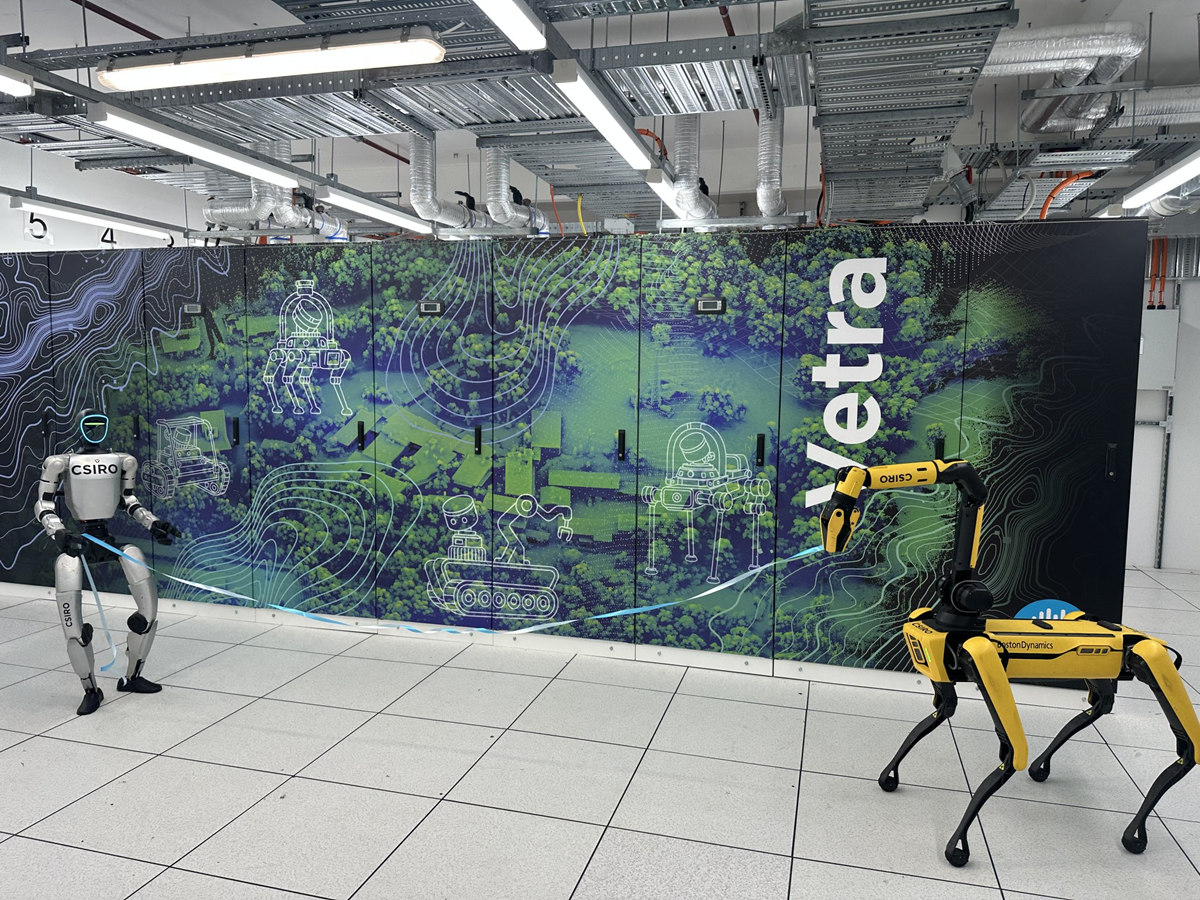
CSIRO has launched Vetra, a compact edge-AI system designed to process data on site for robots and sensing equipment. The installation runs at the Queensland Centre for Advanced Technologies in Pullenvale, west of Brisbane. Data61 director Liming Zhu told InDaily the target was to cut response times from hundreds of milliseconds to tens — a gap that matters when a machine is moving through a warehouse, a production line or a test environment.
The project leans away from the familiar race for bigger model clusters. CSIRO is pitching Vetra as shared infrastructure for edge workloads: process data locally, respond faster, and keep more operational data on site before a decision leaves the building.
According to CSIRO’s announcement, Vetra packs 48 high-performance GPUs into a smaller-footprint installation built for robotics, autonomous machines and sensor-heavy systems. The work fits the agency’s broader robotics and autonomous systems program, which tries to get machines operating in real, unpredictable environments rather than in tightly controlled lab demonstrations. Zhu put the latency case plainly: “The problem is … milliseconds matter.”
On energy, Zhu said the hub uses advanced liquid cooling and a CO2-based refrigeration system designed to cut water use and emissions against traditional approaches. In a separate statement, CSIRO chief technology officer Angus Macoustra said dense AI systems generate substantial heat in enclosed spaces, and that Vetra was built to deliver that compute while pulling down water use and emissions.
For Australian operators, edge AI is shaping up as an infrastructure question, not just a software one. Companies and research groups can already rent model capacity from large cloud providers. Systems that need to respond at machine speed still run into latency, bandwidth and data-handling constraints. Vetra is better understood as a local test bed for industrial automation, field robotics and sensor networks that need fast decisions near the machine — not a rival to hyperscale cloud campuses.
CSIRO’s argument is that some AI workloads belong at the edge rather than in a distant data centre. That is the gap Vetra is meant to fill.
Why local processing matters
AAP News reported that CSIRO expects the system to help bring some robot decision times down from hundreds of milliseconds to tens. That will not matter much for a chatbot window on a laptop. It starts to matter when a robot is navigating around people or equipment, or when a sensing system needs to respond before conditions shift. The local angle is practical, too: a facility in Brisbane gives Australian researchers and industry teams somewhere to trial these workloads without defaulting to overseas infrastructure for every experiment.
The agency said the system could save about 225 tonnes of carbon dioxide each year. That number points to a second tension in the AI build-out: as more organisations chase higher-performance compute, energy, cooling and water consumption are working their way into procurement discussions. Macoustra said Vetra was intended to show that advanced AI systems can pack more computing power into tighter spaces while still accounting for those trade-offs.
The takeaway is not that Australia has suddenly solved robotics. A national research agency is putting money into the less glamorous layer between models and machines — the infrastructure that lets AI run where decisions are actually made. If CSIRO can turn Vetra into a working platform for local partners, the question becomes whether more Australian AI projects start shifting compute closer to the edge.

Asha Iyer
AI editor covering the model wars, AU enterprise adoption, and the policy shaping both. Reports from Sydney.