Pope Leo creates Vatican AI commission as governance debate broadens
Pope Leo XIV has set up a Vatican AI commission, giving the Holy See a formal role in debates over ethics, human dignity and AI policy.
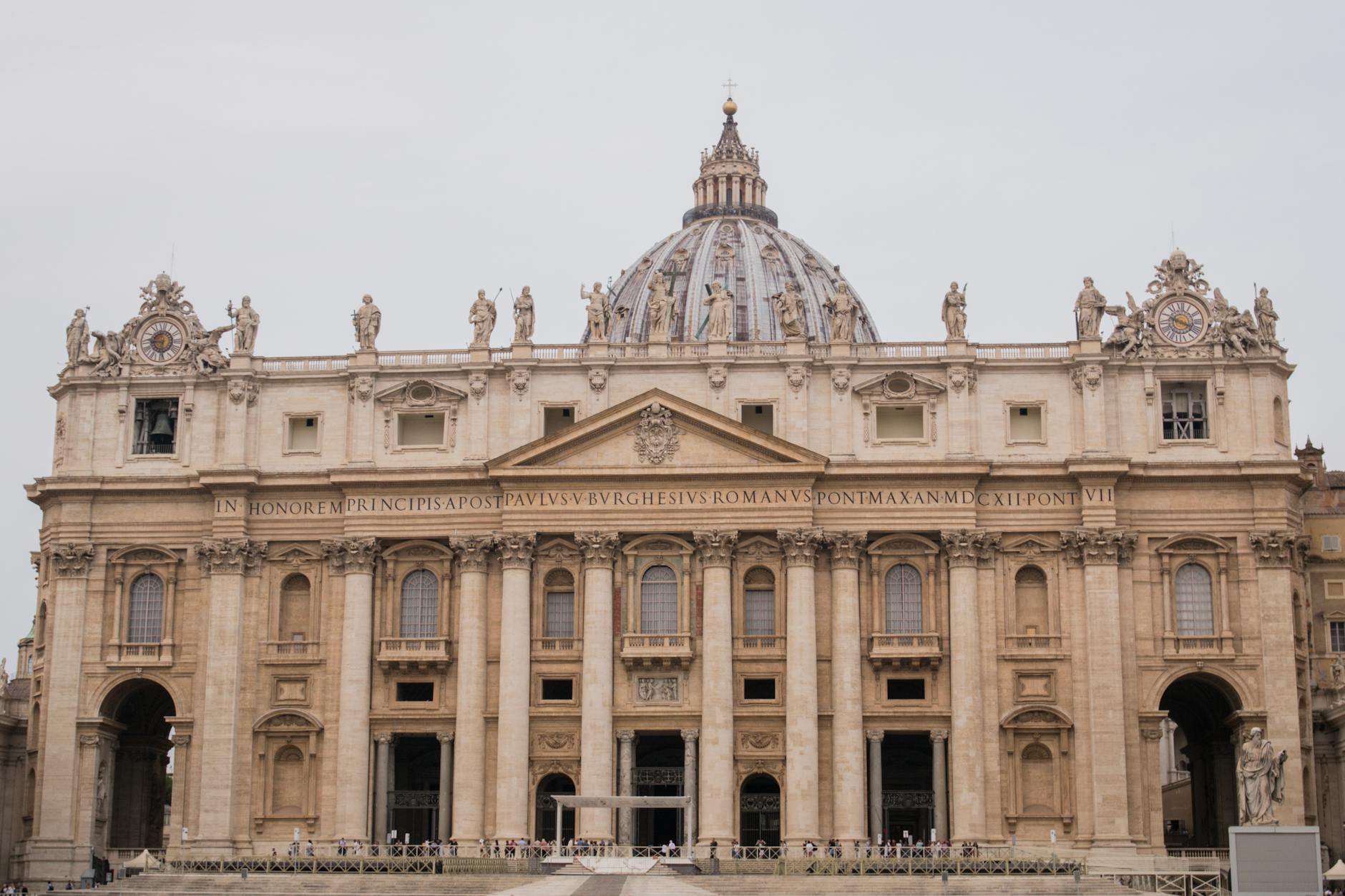
Pope Leo XIV has approved a Vatican artificial-intelligence commission, bringing one of the world’s most influential institutions directly into the debate over how AI should be governed. In an official announcement, the Holy See said the new interdicasterial body will coordinate Church-wide work on AI, examine the technology’s social consequences and help shape Vatican policy from inside the Roman Curia.
AI governance has mostly been framed by regulators, courts, safety researchers and the companies building the models. The Vatican’s move adds a heavyweight voice organised around ethics, labour and human dignity, broadening the field of institutions pressing for a say in how automated systems are designed and used.
According to Vatican News, Leo approved the commission by rescript after an audience with Cardinal Michael Czerny, prefect of the Dicastery for Promoting Integral Human Development. That dicastery will coordinate the group’s work for its first year, after which the arrangement can be renewed. The Vatican said the body was established in response to “the Church’s concern for the dignity of every human person” and AI’s “potential effects on human beings and on humanity as a whole”.
A report by America Magazine said the commission brings together four dicasteries and three pontifical academies. The structure gives the Holy See a formal mechanism to line up doctrine, social policy, communications and scientific expertise around a single fast-moving technology. Large institutions often talk about AI in public while handling policy and procurement questions in separate silos. The Vatican’s new body is designed to cut across them.
Czerny told America Magazine that the commission was “a real sign of hope, to help the Roman Curia to address the challenges of artificial intelligence both internally and for the whole Church, and the whole world”. The phrasing treats AI as cutting across work, institutions and public life, not simply a communications or research problem.
The Holy See is not writing binding rules for model developers. But the commission places the Vatican inside a global argument that has spread beyond frontier-model safety into harder questions of accountability. When automated systems influence jobs, education and public administration, who gets to say where efficiency stops and human dignity begins? The Vatican, by setting up a standing internal structure rather than issuing one-off statements, is signalling it wants to be in the room for those decisions.
When a state agency or tech company launches an AI taskforce it usually reads as sectoral housekeeping. The Vatican’s announcement lands differently because the language is moral, the reach is transnational and the audience extends well past software buyers and regulators. For AI companies already facing scrutiny over deployment and social impact, it is another signal that governance pressure is broadening and becoming harder to contain inside narrow safety frameworks.
Influence over AI policy is fragmenting. National regulators and the biggest model labs still matter, but universities, courts, labour groups, educators and religious institutions are all trying to shape the terms. Pope Leo’s commission will not settle those arguments. What it does show is that AI governance is no longer confined to Silicon Valley boardrooms and government ministries.

Marnie Blackwood
Regulation reporter on Privacy Act reform, eSafety, ACCC tech enforcement, and ACMA. Reports from Canberra.