Advanced Navigation revenue jumps 73% before Series C
Advanced Navigation revenue rose 73% before its $158 million Series C, giving investors a harder test of the Australian deep-tech unicorn.

ASIC-filed accounts show Advanced Navigation lifted revenue and cut losses before closing its $158 million Series C, giving a rare look inside one of Australia’s most heavily funded deep-tech startups. The Sydney company reported revenue of $57.7 million in FY25, up 73 per cent from $33.3 million a year earlier, Forbes Australia reported from the filings.
Investors should care about those numbers more than the headline round. The analyst question is whether Advanced Navigation is becoming a durable hardware-software business, or whether its new unicorn tag is mostly a bet on defence demand and autonomous-systems spending arriving on schedule.
Operators in defence and autonomy read the same figures through a different lens. Their issue is not only growth. It is whether customers can still navigate aircraft, vessels, drones and industrial equipment when satellite positioning is jammed, spoofed or unavailable.
That is the market Advanced Navigation says it is building for. The company announced in March that it had raised $US110 million, about $158 million, in a Series C led by Airtree Ventures, with backing from the National Reconstruction Fund Corporation, KKR, Main Sequence, Malcolm Turnbull’s Turnbull Capital and other investors.
“The era of relying on a single silver bullet for navigation is over.”
Chris Shaw, Advanced Navigation
The filing changes the funding story
Most funding-round coverage stops at the cap table. Advanced Navigation’s filings make the story sharper because they show what the business looked like before the new capital arrived. Gross profit nearly doubled to $37.3 million from $19.8 million, net loss more than halved to $14.3 million from $31.5 million, and operating cash flow swung to positive $2.1 million from negative $12.2 million, according to the same Forbes Australia report.

None of that amounts to profitability, and it does not answer how much revenue is repeatable. Still, it separates Advanced Navigation from a cleaner but weaker narrative: deep-tech startup raises at a big valuation, then promises future scale. Here, the company can point to higher sales, stronger gross profit and positive operating cash flow before taking the money.
Shaw gave Forbes the short version.
“We’ve delivered extraordinary revenue growth.”
Chris Shaw, Forbes Australia
A harder version is less promotional. Hardware-heavy deep tech usually burns capital through manufacturing, certification, field testing and sales cycles that move more slowly than SaaS. A positive operating-cash-flow line, even for one year, tells investors that customer receipts and cost control are not entirely theoretical. Now the test is whether that line survives expansion into more markets and possible acquisitions.
Global customers are doing the heavy lifting
More than 80 per cent of Advanced Navigation’s revenue comes from the United States and Europe, not Australia, the company says. Its named customers include NASA, BHP, General Motors and defence contractors, according to the company’s Series C statement. Such a mix is important for Australian startup policy. The local market is a base for engineering and manufacturing, but not a large enough buyer to justify the valuation alone.
Commercially, it makes the company less like a domestic enterprise-software scale-up and more like an export industrial business. That distinction matters because the National Reconstruction Fund Corporation’s reported $50 million participation is not ordinary venture capital. It is a sovereign-capability bet that navigation, robotics and resilient positioning systems should be built in Australia and sold globally.
For policymakers, the question is whether public capital is adding capacity that private investors would not fund by themselves. This case is stronger than most because Advanced Navigation can point to local R&D, high-value manufacturing and international customers. Government-backed capital does not remove commercial pressure. It raises the bar for showing that the company is not just de-risking a private valuation with public money.
GPS-denied navigation is no longer a niche problem
Current market signals help explain why investors were willing to pay up. GPS jamming and spoofing are no longer edge cases reserved for war zones. The Register reported last week that suspected Russian jamming disrupted navigation on a jet carrying the UK’s defence secretary, forcing pilots to rely on inertial navigation using motion and rotation sensors.
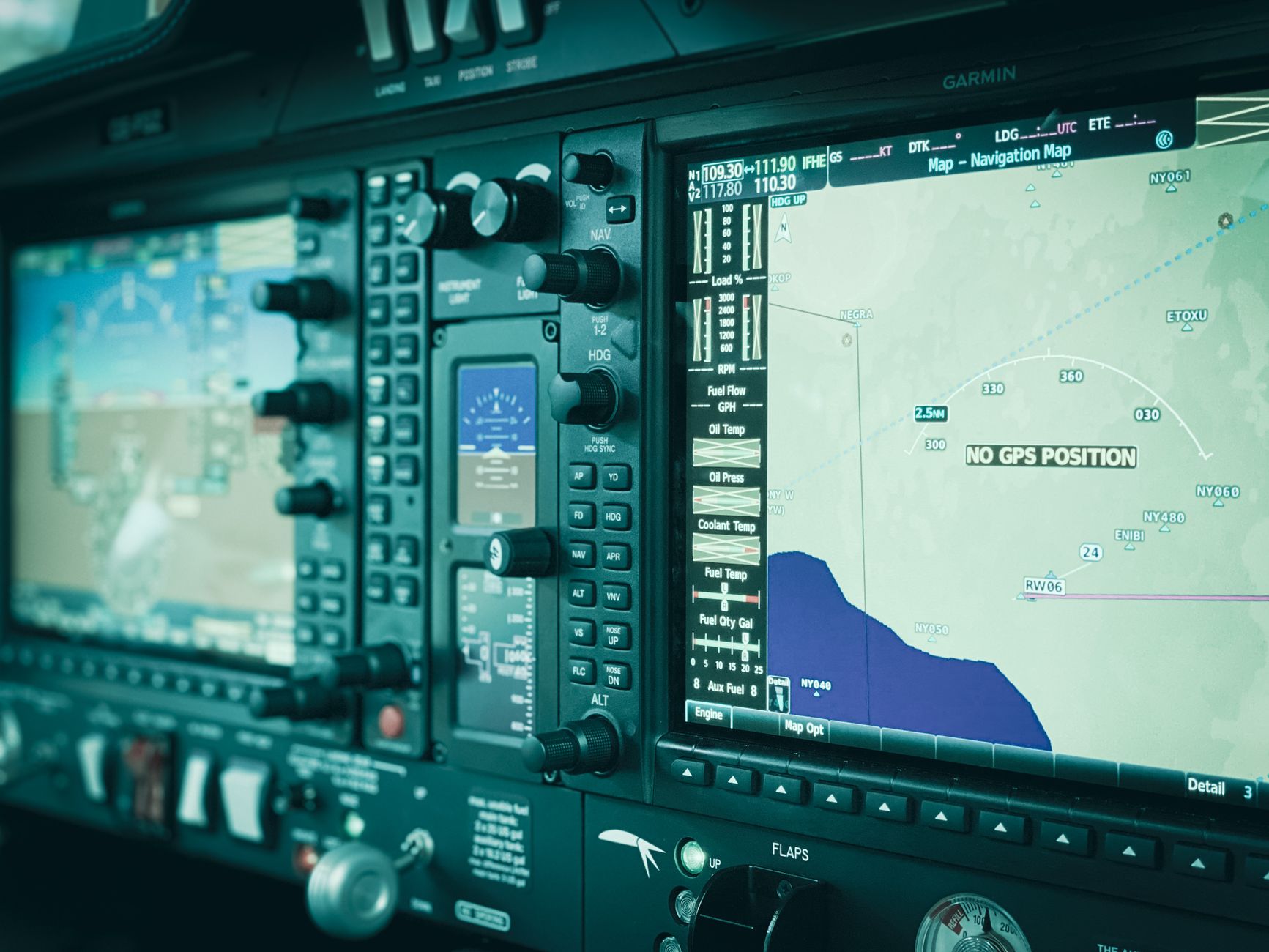
One flight disruption is not evidence for Advanced Navigation’s sales pipeline. Rather, it shows that the problem the company sells against is becoming more visible. Defence customers are the obvious buyers, but mining, marine, space and autonomous-vehicle operators also need resilient positioning when satellite signals degrade.
Sypaq Systems offers a useful Australian comparison. InnovationAus recently described the defence-technology company’s long build as a 30-year journey to overnight success. Its lesson for Advanced Navigation is not that defence tech is suddenly easy. Deep technical capability can sit unnoticed for years, then become commercially valuable when procurement priorities change.
Airtree’s participation also fits a broader shift in local venture. AFR Technology has analysed its leadership change as a move into a new investment era. Backing Advanced Navigation gives Airtree a company that sells into defence, space and industrial autonomy rather than another application-layer software play.
The valuation still needs proof
Sceptics can keep the maths simple. A valuation above $1 billion on $57.7 million of annual revenue is a long way ahead of the current accounts. Investors are underwriting growth, margin expansion and global adoption that are not yet visible in a single set of filings.
Such a gap does not make the round irrational. Instead, it makes it conditional. If Advanced Navigation can use the Series C to scale manufacturing, keep gross margins improving and turn overseas demand into recurring product revenue, the March raise will look less like late-cycle exuberance and more like a financing round timed to operational momentum.
Shaw has also flagged consolidation. He told Forbes the company was looking at complementary technologies it could merge with or acquire over the next 12 to 18 months.
“There’s other companies that have complementary tech in our space that we’re looking to merge with and acquire in the next 12 to 18 months.”
Chris Shaw, Forbes Australia
Acquisitions could widen the product stack. They could also add integration risk just as Advanced Navigation is trying to prove its core economics. For a company selling mission-critical systems, customers will care less about the unicorn label than reliability, certification, support and delivery.
This is why the filings are useful. Those accounts do not settle whether Advanced Navigation will become the global navigation platform its investors want. They show that, before the Series C, the company was already moving in the right financial direction: higher revenue, narrower losses and positive operating cash flow. In Australia’s deep-tech market, that is a better signal than another funding headline.

Jules Hartman
Startup reporter tracking the Sydney–Melbourne ecosystem, raises, and exits. Reports from Surry Hills.