CBA AI costs warning shifts Australia’s enterprise debate
CBA AI costs warning puts token spend, work slop and governance at the centre of Australia’s enterprise AI rollout for major companies.
Commonwealth Bank is recasting Australia’s enterprise AI debate around cost, not access. Models that once sat inside simple copilots are being pushed into messier workflows, and the bank says the bill can become much harder to predict when the work gets complex.
That warning carries weight because CBA is hardly an AI holdout. It is one of the country’s biggest technology buyers, has published a formal AI adoption programme, and has argued that artificial intelligence could add between $45 billion and $115 billion a year to Australia’s economy by 2030. Pilots are no longer the hard question. Running AI at scale, with a defensible budget and a clear owner, is.
Labour-market researchers see the same moment from another angle. The mass white-collar jobs shock has not arrived as a single wave, although early signals are uneven. The Sydney Morning Herald reported that Monash University economist Zac Gross has found employment and hours in AI-exposed occupations down 9 per cent since 2022, while wages have not taken the same hit.
Spend is rising. Productivity still has to be proven. Governance, for many boards, remains unfinished.
AI costs move from experiment to operating line
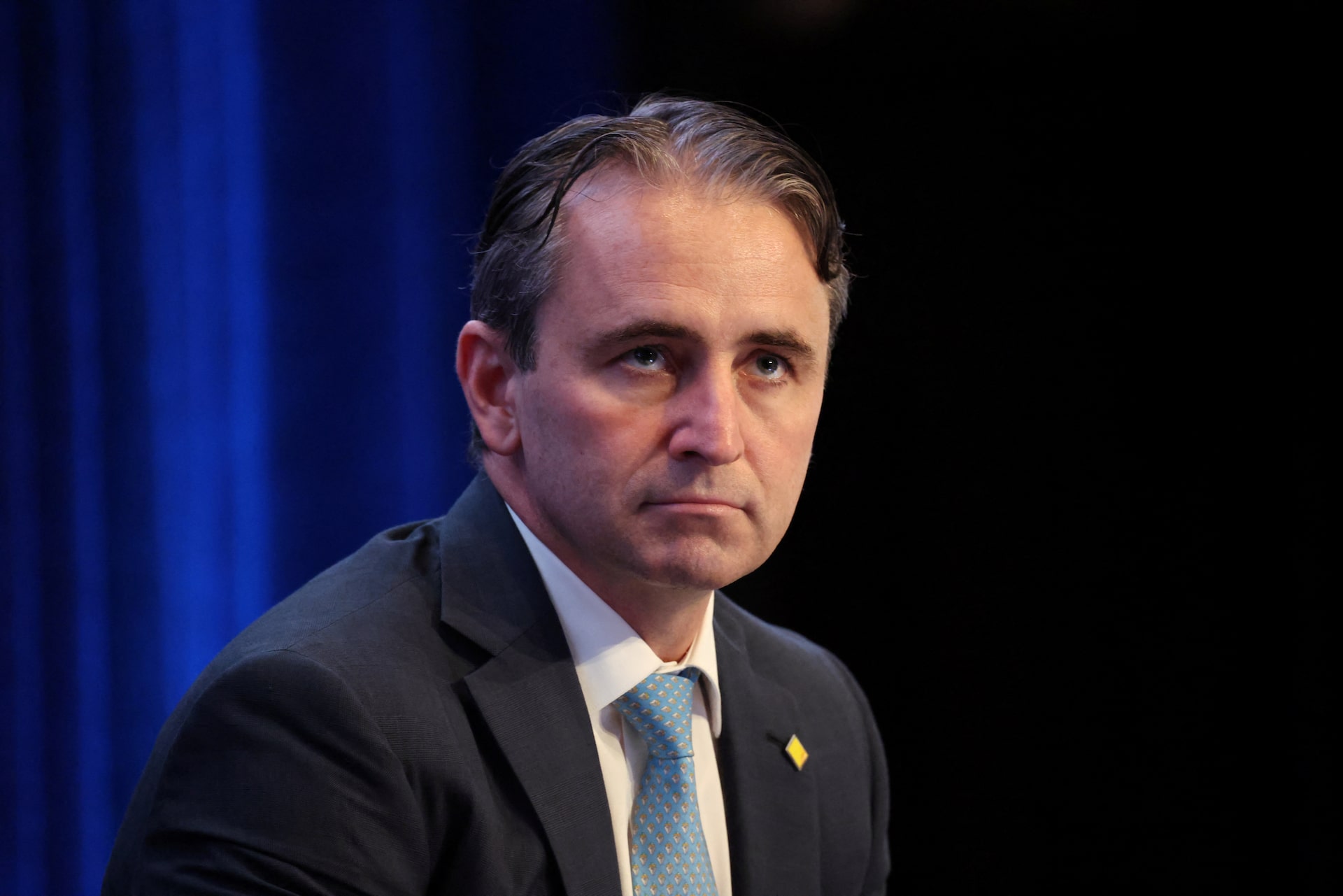
Matt Comyn put the financial issue plainly. The CBA chief executive told Reuters that businesses should not assume advanced AI bills will rise smoothly with use, because “your token costs do not scale on a linear basis”. A chatbot that summarises a document is one budget item. A model asked to reason across customer data, internal policy, compliance constraints and live systems is another.
“your token costs do not scale on a linear basis”
Matt Comyn, Commonwealth Bank, cited by Reuters
Seen that way, the bank’s comments are more useful than generic adoption hype. CBA’s own February AI report treated the technology as an organisational programme rather than a plug-in feature. Output gains, the bank said, depend on skills, safeguards and process redesign. Its cost warning is the other side of the ledger.
Australian executives have spent two years buying access. Usage discipline comes next: which queries justify a premium reasoning model, which customer workflows need retrieval and audit trails, and which internal tasks belong with cheaper automation, templates or smaller models. Those are procurement questions as much as technology questions.
Pressure is building outside CBA as well. AFR Technology has reported that big business AI adoption is running into rising cost concerns, while global software vendors test usage-based billing and token meters. For CIOs, the awkward shift is that AI is not priced like older enterprise software. A licence can be forecast. A reasoning workload can sprawl.
Work slop makes judgement the scarce input
Comyn’s second point was cultural. Expensive AI systems can still produce low-value material, leaving staff to sift, correct and defend documents that should not have existed in the first place.
“The scarcity is not around analysis or the preparation of information or PowerPoints or Word docs.”
Matt Comyn, Commonwealth Bank, cited by Reuters
Corporate Australia already has plenty of documents. Generative AI is good at making more of them. Judgement is scarcer: which analysis changes a decision, which slide should be cut, which customer process deserves automation and which one is better left alone.
“Work slop” is a useful phrase because it names a real failure mode. A model can lower the cost of producing drafts, reports and meeting notes while raising the cost of deciding whether any of them matter. When every team generates more internal artefacts, the bottleneck moves from writing to review.
CBA’s published AI principles emphasise responsible use, human oversight and safeguards. Procedural rules like that become economic controls when usage carries variable cost. Blocking a weak workflow is also a spending decision.
Workforce change sits underneath the cost argument. In an AFR piece last week, Comyn argued against “pretending every role can be preserved” as AI changes work. That is not the same as predicting imminent mass layoffs. It signals that adaptation, reskilling and role redesign are part of the cost base, not a public-relations appendix.
The jobs shock is lagged, not settled
Evidence on labour is still messy. The SMH reported that jobs highly or significantly exposed to AI account for about 15 per cent of Australian employment, with weaker hiring showing up first in clerical, payroll, data-entry and some customer-service work. It also cited a $155 billion data-centre spending pipeline and $6 billion in AI-linked equipment and machinery spending in the March quarter.

Those numbers point in different directions. Capital is moving quickly. Labour adjustment is slower. Near-term enterprise AI work therefore looks less like the job-apocalypse debate and more like budgeting, governance, training and workflow selection.
Luke Yeaman, CBA’s chief economist, has argued in AFR Technology that AI can lift Australia’s growth if businesses and policymakers do the hard implementation work. The caveat matters. Productivity gains do not arrive because a company buys model access; they arrive when a process is redesigned, error rates fall, cycle time drops or a worker can handle higher-value tasks with less administrative drag.
Scepticism is still warranted. If AI-exposed occupations are already seeing lower hours and employment, firms may be slowing hiring before announcing formal restructures. That pattern would fit white-collar automation more closely than a sudden wave of redundancies, and it makes board-level measurement harder because avoided hires rarely show up as dramatic AI savings.
CBA is trying to own both sides of the argument
CBA’s position is awkward, but useful. The bank says AI can lift national productivity while warning that poor deployment can create cost blowouts, work slop and social licence problems. Production systems make those claims less contradictory than they sound.
Before scaling, corporate AI projects need to answer four questions. What decision or process is being improved. What will the model cost at real usage volume. Who is accountable when output is wrong. What work should stop because the AI exists.
Organisations often avoid the last question. If AI adds another layer of documents, dashboards and internal commentary, the technology becomes a tax on attention. If it removes low-value steps and tightens human judgement around the remaining ones, the economics look different.
Read CBA’s warning as a procurement memo for the next phase, not an anti-AI argument. Australian enterprises do not need another round of demonstration copilots. Cost controls, workflow owners and a willingness to kill AI projects that mostly manufacture more work will matter more.
Companies that make those calls early may still capture the productivity upside. Others will discover that AI can be impressive and expensive at the same time, especially when the output is slop with a larger cloud bill.

Soren Chau
Enterprise editor covering AWS, Azure, and GCP in the AU region, plus the SaaS shaping local IT. Reports from Sydney.