AirTrunk India investment: $US30b AI data-centre push
AirTrunk India investment plans put $US30 billion into data centres by 2030 as the Sydney-founded operator chases AI demand.
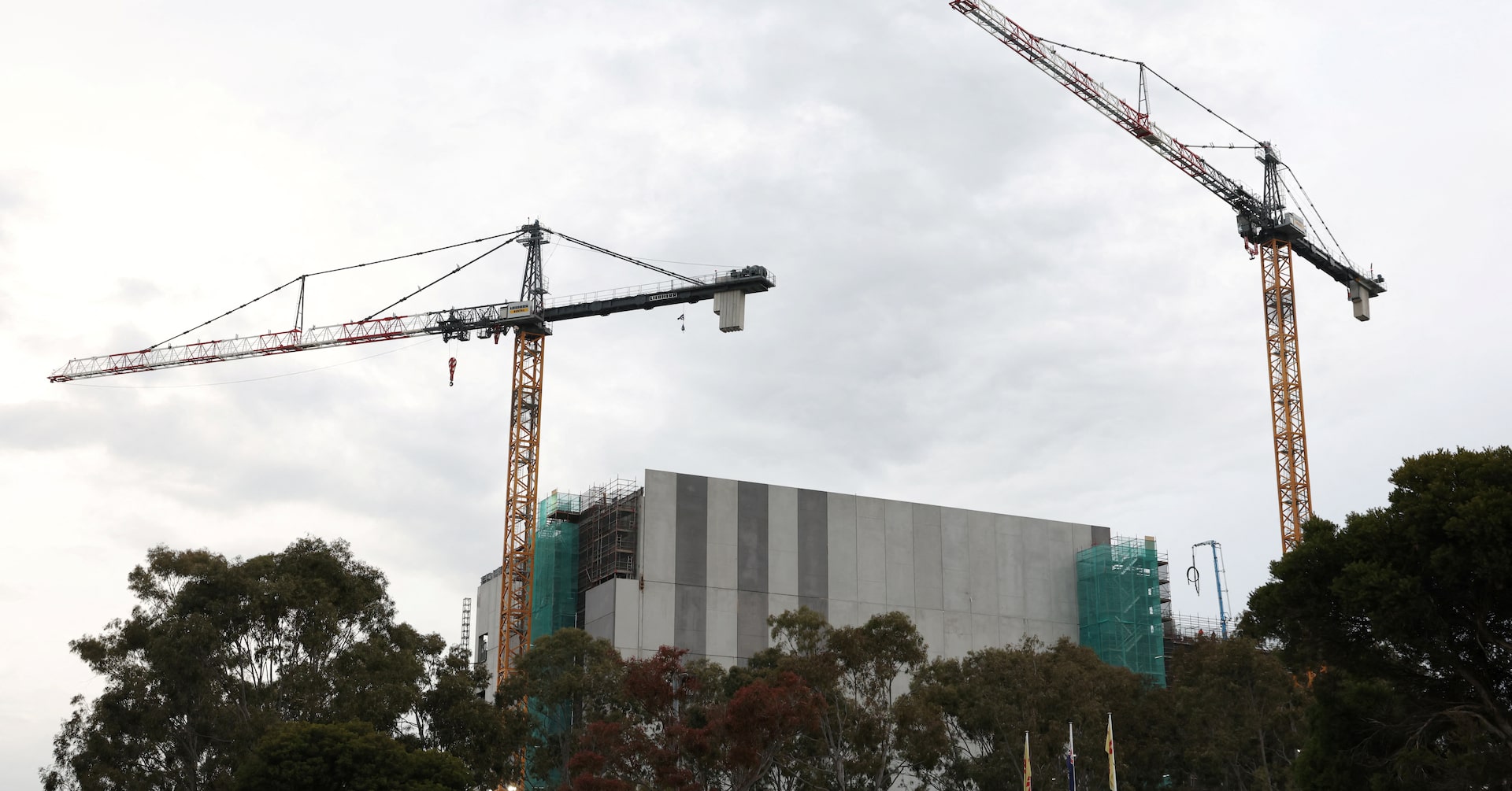
Australian data-centre operator AirTrunk says it will spend $US30 billion (about $46 billion) in India by 2030, pushing the Sydney-founded group into one of Asia’s largest markets for AI and cloud infrastructure.
The Blackstone-backed company plans 5 gigawatts of data-centre capacity, AirTrunk told Reuters on Friday. It already has 600 megawatts in its Indian pipeline across Mumbai, Chennai and Hyderabad.
That is a step-up for a business best known in Australia for huge Asia-Pacific campuses. It also puts an Australian-founded operator closer to the front of the regional contest to host hyperscale computing, where sites are judged on power, approvals and construction speed.
Chief executive Robin Khuda said countries are competing for the capital behind AI infrastructure.
“There is a recognition that AI investment is a global race and that capital will flow to places that are prepared to compete for it.”
Robin Khuda, AirTrunk chief executive, told Reuters
The announcement has a direct Australian edge. AirTrunk’s next large wave of spending is outside its home market just as local demand for data-centre capacity is rising. Hyperscalers want land, grid connections and cooling systems at a pace few markets can easily supply.
India adds scale to AirTrunk’s AI build-out
AirTrunk’s 5 gigawatt target is large even against the current data-centre build-out. For cloud and AI buyers, capacity means dense power, cooling and fibre access. Warehouse space alone is no longer the offer.
AirTrunk has not published a city-by-city breakdown for the $US30 billion plan. Its existing 600 megawatt pipeline points to a multi-city strategy, with Mumbai, Chennai and Hyderabad close to enterprise customers, submarine cable routes or major technology clusters. That spread lowers reliance on one campus or one state approval process.
The expansion changes the pitch. Data-centre operators are selling their place in the AI supply chain as much as resilient hosting. Power contracts and construction timing can determine where cloud providers put their next clusters.
The Australian link is still visible. The Australian Financial Review reported last week that a Google-linked AirTrunk data-centre solar farm in Australia was ready to feed power into the grid. The project shows how tightly new capacity is tied to energy procurement.
Offshore growth raises the local benefits question
The India push lands in a difficult policy moment at home. An ABC News analysis put Australia’s lined-up data-centre development and investment pipeline at more than $150 billion. It also warned that local suppliers are not guaranteed the largest gains.
“A meaningful share of data centre fit-out relies on imported capital equipment.”
Tom Ryan, quoted by ABC News
That warning does not weaken AirTrunk’s commercial case. It narrows the policy lesson. The company is an Australian technology-infrastructure success story, but spillovers from a 5 gigawatt build-out will hinge on where operators buy equipment, commission engineering, source power and hire long-term staff.
A large offshore commitment can strengthen an Australian-founded company without settling Australia’s policy question: how to capture more of the AI infrastructure supply chain.
For AirTrunk, India offers scale, fast cloud adoption and a government trying to attract digital infrastructure. If it locks in sites and power before demand peaks, the $US30 billion plan would shift the company from regional data-centre specialist to core supplier for Asia’s AI build-out.
Execution is the catch. Five gigawatts by 2030 means years of land acquisition, grid work, cooling design and customer contracts. It also puts AirTrunk against the same constraints facing builders in Australia: power availability, community scrutiny, imported hardware and pressure to prove AI infrastructure creates more than construction headlines.
AirTrunk’s announcement reads as a marker for the next phase of the data-centre boom. Australian operators are still building at home. The AI capacity race, though, is regional, capital-intensive and measured in gigawatts.

Soren Chau
Enterprise editor covering AWS, Azure, and GCP in the AU region, plus the SaaS shaping local IT. Reports from Sydney.