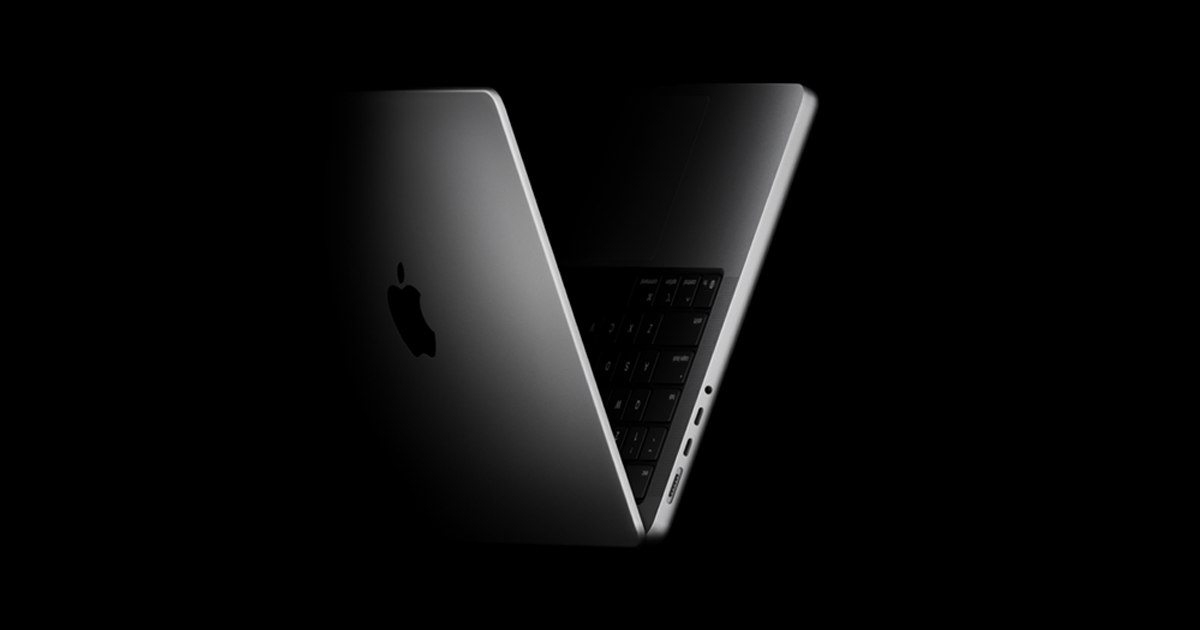
Apple M7 chips: why the M6 Pro and Max may be skipped
Apple M7 chips are reportedly arriving faster because Apple wants bigger neural-engine gains sooner, a shift with consequences for Macs and AI servers.
Apple is reshaping its Mac silicon roadmap around artificial intelligence, if Bloomberg’s latest report on the M7 family holds. Instead of filling out the usual sequence from base model to Pro, Max and Ultra, the company is reportedly prepared to skip the M6 Pro and M6 Max and move faster towards larger neural-processing gains in M7.
The message from inside the roadmap is blunt enough. Apple seems willing to leave a tidy product ladder incomplete when the next step offers a clearer AI payoff. After years of selling Apple silicon on efficiency, battery life and tight hardware integration, the company now appears to be letting AI capability influence timing as well as feature lists.
Analysts see a wider move. As The Verge argued in its analysis of Apple’s car-programme chip legacy, the reported M7 Ultra plan reads less like a faster Mac story and more like a sign that Apple is pulling the Mac roadmap into a larger compute strategy across laptops, private cloud infrastructure and whatever follows the first wave of Apple Intelligence features.
The rumoured skip is therefore about more than two missing laptop parts. It asks whether Apple now sees neural-engine gains, memory throughput and server-scale silicon as more urgent than maintaining the old annual cadence. If that reading is right, the Mac chip line is becoming an AI timetable.
An AI timetable, not a Mac timetable
Most of the significance in the Bloomberg report sits in the trade-off, not the label on the skipped chips. Apple appears to have judged the M7 family’s AI improvements valuable enough to accelerate, even if that meant leaving the M6 range unfinished.
Buyers, developers and enterprise IT teams have been trained to expect a neat rollout: base chip first, then the more powerful Pro and Max versions, and Ultra where it makes sense. Reportedly abandoning the M6 Pro and M6 Max suggests Apple now thinks the engineering value of a cleaner AI leap outweighs the value of that predictable ladder.
In Bloomberg’s account, Mark Gurman framed the decision in blunt terms:
“Apple had been planning major neural-processing upgrades for the M7 family and ultimately decided those improvements were important enough to justify accelerating the next generation rather than completing the M6 lineup”
Mark Gurman, Bloomberg Technology
That line shifts the debate away from gadget speculation. The question is not whether a MacBook Pro with an M6 Max would have been a little faster or a little more efficient. It is what Apple thinks it needs to make on-device AI feel materially better. If the answer is “a bigger neural-engine jump, sooner”, the chip roadmap is now being set by AI readiness.
Earlier this month, MacRumors’ original reporting on Mac Mini AI demand and Apple’s on-device direction pointed back to design choices Apple made well before today’s model boom. The Neural Engine was never only a marketing badge. It was a long-range bet that local inference, low power draw and tight hardware-software integration would matter. What looks new now is Apple’s willingness to let that bet override the usual release sequence.
Bloomberg’s timing reinforces the point. The report says the base M7 could arrive in the first half of 2027, with M7 Pro and M7 Max later that year. That is a compressed hand-off to an AI-first generation.
The car programme still shows up in the silicon
Another reading starts with what Apple did not kill. The abandoned car programme may have failed as a vehicle project, but its silicon legacy appears to be alive inside Apple’s AI stack.
In The Verge’s analysis, Terrence O’Brien argued that the car effort left Apple with unusually ambitious chip work around perception, local decision-making and specialised AI compute. Bloomberg’s roadmap report extends that logic: the M7 Ultra is being discussed as a possible bridge to server-grade silicon that could support Apple’s private cloud ambitions, not only as the fastest future Mac chip.
Bloomberg’s broader claim is even more direct:
“AI is no longer just another feature Apple’s chips need to support. It is now shaping how those products are designed and when they are shipped.”
Mark Gurman, Bloomberg Technology
For analysts, that quote answers part of the infrastructure question. Apple increasingly looks as if it is turning a consumer chip roadmap into something bigger. A reported 2028 M7 Ultra with support for up to 1.5TB of memory is hard to explain as a normal laptop-era progression. It makes more sense if Apple wants one silicon story covering local AI on the device and heavier workloads in a controlled, Apple-designed back end.
Rather than becoming a hyperscaler in the mould of Microsoft or Google, Apple appears to be trying to control more of the path between a user request and the compute that answers it. That would fit a world in which Apple Intelligence depends on both local processing and tightly managed cloud capacity. Seen that way, skipping the M6 Pro and Max is a clue about priorities, not a gap in the chart.
The risk is cost, not just timing
Sceptics focus on a plainer problem: even a smart roadmap can run into hard economics.
Fast Company, in an original analysis of memory shortages and higher chip prices, argued that AI server demand is tightening the supply of RAM and other components that matter for advanced systems. That concern sits outside the Mac rumour cycle, but it belongs in the same frame. Larger neural engines, more memory throughput and server-class ambitions do not arrive in a vacuum. They arrive in a market where AI infrastructure is already pushing up costs.
Even a well-timed roadmap cannot outrun supply constraints. More capable chips can still be bottlenecked by memory pricing, packaging complexity or the cost of building enough high-end systems to make cloud AI features feel fast. For Australian buyers, the practical implication is not yet a confirmed price rise, but the possibility that AI-first Macs arrive with tighter configuration trade-offs or higher entry prices than a clean product chart would suggest.
There is another hazard. If Apple reshapes the Mac line too visibly around Apple Intelligence before those features feel necessary to mainstream users, the company may end up optimising for a capability that still has to prove itself. The builder-optimist case is strategically neat. It only pays off if the user-facing experience gets good enough, quickly enough, to justify the silicon detour.
For now, the reported roadmap matters less as a list of future chip names than as a statement about Apple’s order of operations. For years, Apple used custom silicon to make its devices better. Now it appears to be using device releases to serve a bigger silicon plan. If Bloomberg’s report is directionally right, the next phase of Apple silicon will be set less by the Mac’s traditional upgrade rhythm and more by how urgently Apple thinks it needs better AI, both on the machine and behind it.

Pip Sanderson
Reviews editor on phones, wearables, and the gear that lands in Australian shops. Reports from Melbourne.