Google turns AI search into an ad business, not just a search feature
Google tests AI-generated ads in Search and AI Mode, signalling the company's AI overhaul is shifting from user acquisition to monetisation. The move represents a fundamental change in digital advertising economics as Google transitions from referral engine to answer engine.
Google has begun testing new ad formats inside standard Search and AI Mode, signalling that the company’s AI overhaul is shifting from user acquisition to monetisation. The AI-generated advertisements represent the latest stage in Google’s transition from a referral engine that sends users to other websites to an answer engine that keeps them within its own platform.
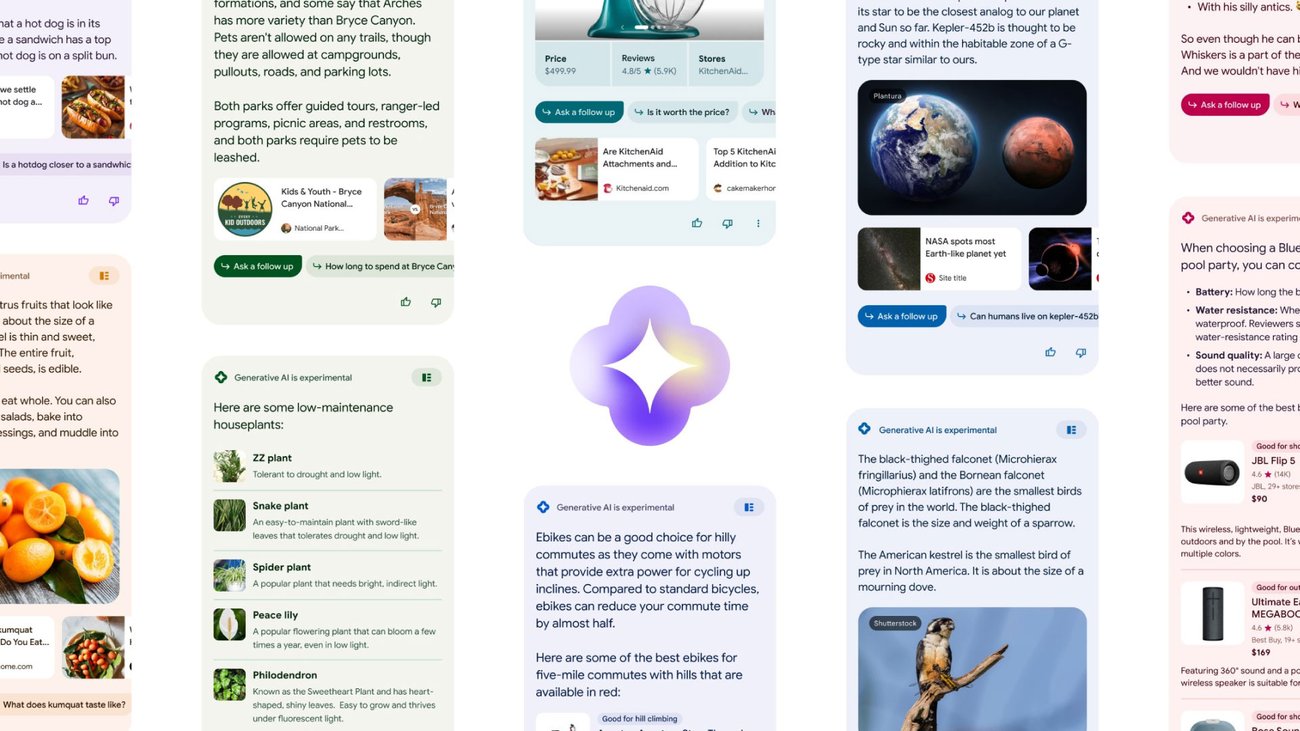
The development marks a fundamental shift in digital advertising economics. Where Google previously extracted value by sending users to publisher websites, it now monetises the content summaries it generates from those same sites through AI Overviews and AI Mode answers.
“AI is boosting our ability to deeply understand user intent for a given search query and to find the most relevant ads,” Google Chief Business Officer Philipp Schindler said during the company’s Q1 2026 earnings call.

Google’s AI monetisation shows immediate returns
The strategy is already delivering results for Google. Search & Other revenue hit $60.4 billion in Q1 2026, up 19% year-over-year, even as the company’s AI features reduce clicks to external websites.
Alphabet CEO Sundar Pichai told analysts that “queries are at an all-time high” thanks to AI Overviews and AI Mode driving greater search usage. The metrics suggest Google has successfully maintained user engagement while reducing external referrals — a critical balance for its advertising-dependent business model.
Behind the growth lies a strategic shift in campaign mechanics. More than 30% of Google’s Search advertising spend now uses AI-enabled campaigns like AI Max or Performance Max, with Schindler noting that “these advertisers are seeing more conversion for the same spend.”
The transition reflects Google’s recognition that traditional keyword-based advertising requires augmentation as search behaviour evolves toward conversational, intent-driven queries that AI systems can interpret more effectively than rigid keyword matching.
Australian businesses already adapting to AI-powered ads
Australian marketers are experiencing this shift firsthand. AI Overview ads launched in Australia during Q4 2025, with eligibility requiring Performance Max, AI Max, or broad match campaigns paired with Smart Bidding.
The rollout has forced local businesses to abandon traditional keyword strategies for AI-driven intent matching. Melbourne-based digital agency D-Linkers advises clients that AI Overview ad placement depends on Google’s assessment of commercial intent rather than exact keyword matches.
More than 30% of our customers’ Search spend now uses AI enabled campaigns AI Max or Performance Max. And these advertisers are seeing more conversion for the same spend.
— Philipp Schindler, Google Chief Business Officer
For Australian e-commerce and service businesses, the change requires budget reallocation from traditional Search campaigns toward AI-optimised formats. Early adopters report improved conversion rates, but the transition demands new expertise in campaign structure and bidding strategies that traditional search marketers may lack.
The shift is particularly pronounced in sectors like finance, health, and professional services where Google’s AI systems can interpret complex user queries and match them with relevant local businesses through contextual understanding rather than keyword proximity.

Publishers face traffic collapse as AI keeps users on Google
The monetisation comes at a significant cost to publishers. Research by Based.info found that publisher click-through rates have collapsed by 58% when AI Overviews appear — up from 34.5% eight months earlier.
The decline represents a structural break in the 20-year bargain between Google and content creators. Publishers provided free content to be indexed; Google provided traffic in return. AI Overviews extract value from publisher content through summaries while reducing the referral traffic that supports publisher business models.
Compounding the challenge, 25.5% of AI Overview results now carry commercial advertising — up 394% year-over-year. This means users see answers and ads without clicking through to the original sources.
Google Network revenue, which includes publisher-focused ad products, fell 4% in Q1 2026 as AI features diverted attention from traditional web results. The decline suggests Google’s pivot toward AI-generated answers is cannibalising the advertising products that previously supported the broader publisher landscape.
AI-campaign advertisers gain competitive advantage
The transition creates clear winners among advertisers who adapt quickly. Businesses using AI-powered campaigns report better performance metrics than those clinging to traditional keyword-based approaches.
“Even when we don’t have a direct user query, we’re making significant strides in improving relevance,” Schindler explained, referring to Google’s ability to surface ads based on inferred intent rather than explicit search terms.
Forrester analysts noted that Google’s AI systems can interpret complex user needs and match them with relevant products or services, potentially reducing wasted ad spend on irrelevant clicks while improving conversion rates for matched traffic.
The advantage extends beyond traditional search advertising. AI Mode, Google’s conversational search interface, allows for contextual ad placement within multi-turn conversations, creating new opportunities for businesses to engage users during research and decision-making processes.
However, the shift requires significant investment in campaign restructuring and performance measurement. Advertisers must move beyond simple keyword bidding toward comprehensive account strategies that leverage Google’s machine learning systems across multiple campaign types simultaneously.
Search transforms from referral engine to answer engine
Google’s AI advertising expansion signals a broader transformation of search from a discovery tool to a completion tool. Rather than helping users find information elsewhere, Google increasingly provides answers directly while monetising the interaction through contextual advertising.
This represents the most significant change in search economics since Google’s AdWords launch in 2000. Where the original model aligned Google’s interests with publisher success — more quality content meant better search results and more ad revenue — AI search may decouple these incentives entirely.
PPC Land’s analysis suggests the trend will accelerate as Google refines its AI systems and expands AI Overview coverage to more query types. Australian businesses relying on organic search traffic face pressure to diversify their customer acquisition strategies as traditional SEO becomes less effective.
The implications extend beyond individual websites to the broader information economy. As Google’s AI systems become more sophisticated at extracting and synthesising content, the incentive structure that has supported free web publishing for two decades may require fundamental restructuring.
For Australian businesses, the shift demands immediate attention to AI-optimised advertising strategies while longer-term planning for a digital environment where Google controls both questions and answers.

Asha Iyer
AI editor covering the model wars, AU enterprise adoption, and the policy shaping both. Reports from Sydney.