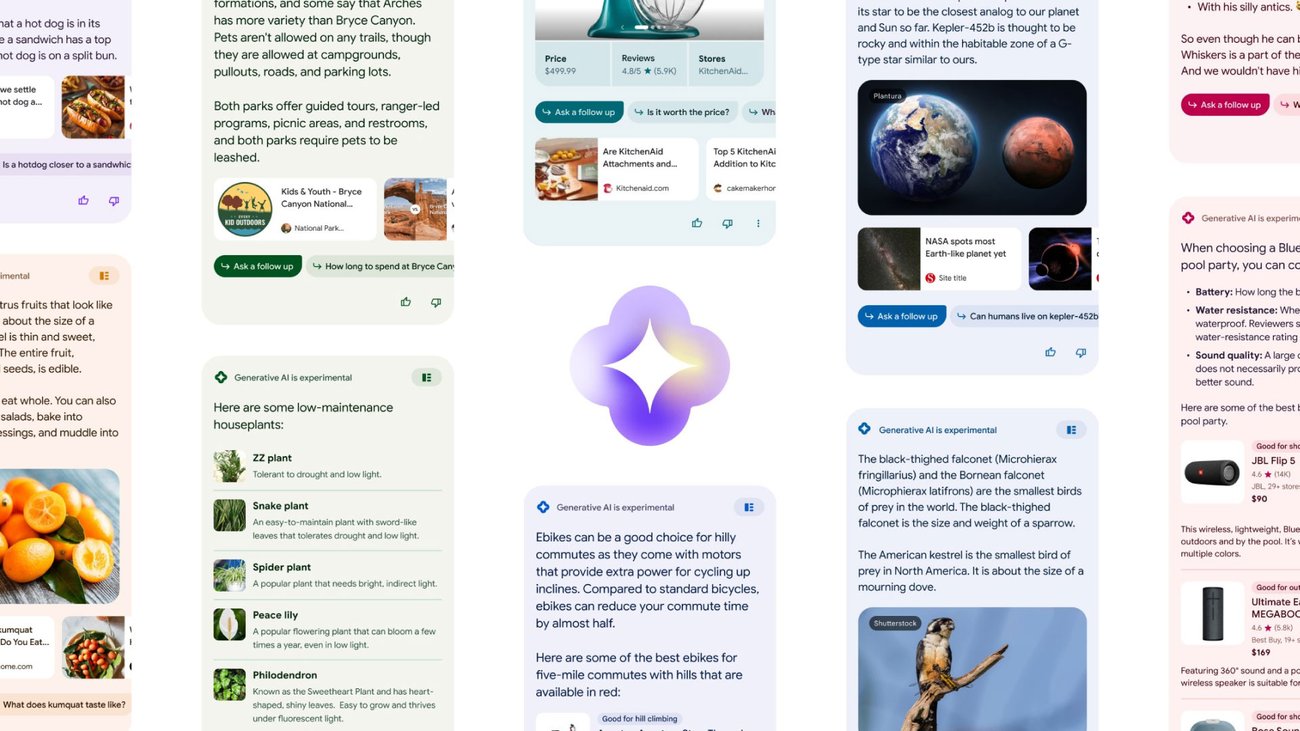
Google AI search backlash sends some users to DuckDuckGo
Google AI search backlash is lifting DuckDuckGo installs, suggesting users want more control as Google turns Search into an answer engine.
DuckDuckGo said installs rose sharply after Google’s search overhaul at I/O pushed more AI-generated answers into the core product, offering one of the clearest early signs that some users do not want Search rebuilt around AI by default. TechCrunch reported that the company saw a roughly 30 per cent peak in US app installs on 25 May, while Engadget reported average week-on-week US installs rose 18.1 per cent and visits to its No AI page rose 22.7 per cent.
Users who want plain links and more control may see Google’s new search experience less as an upgrade than as a workflow imposed on them. DuckDuckGo chief executive Gabriel Weinberg told Engadget the company was seeing a sustained surge after the announcements, particularly on iPhone, where US installs averaged 33 per cent above the prior week and peaked 69.9 per cent on 25 May.
“Google is force-feeding AI with no way to opt out.”
Gabriel Weinberg, DuckDuckGo CEO
Seen from an analyst’s desk, the same evidence looks smaller. Fast Company noted that DuckDuckGo’s US search share still sits in a low-single-digit band, between 1.74 per cent and 2.53 per cent over the past 12 months, which makes a burst of new installs easier to generate and harder to mistake for a durable market swing. Business Insider reported that DuckDuckGo communications executive Kamyl Bazbaz called the move unusual, while stopping short of claiming a lasting migration.
“There hasn’t been a news event that created this kind of jump in a long time”
Kamyl Bazbaz, DuckDuckGo
That is the narrow read on the numbers. They do not prove Google is losing search at scale. They do suggest Google has turned user choice into a competitive wedge. When the default search experience starts answering on the user’s behalf, rather than routing them cleanly to the web, even a modest backlash becomes strategically meaningful for a rival whose pitch is restraint.
A protest signal, not yet a market swing
The spike reads more accurately as a protest signal than as market share moving overnight. Installs, no-AI page visits and social chatter point in the same direction: a slice of users is testing alternatives because Google’s AI layer feels more intrusive than useful.

Curiosity and frustration move faster than habit. A user can install DuckDuckGo in seconds, try its No AI page for a handful of searches, and still keep Google as the default tomorrow. That makes the data useful as a sentiment barometer, but incomplete as a market-share read. The surge matters because it arrived immediately after a product decision, not because it proves lasting defection.
For users, the reaction looks less like a privacy revolt than a control problem. The Engadget and Fast Company reports both point that way. Users appear to be rewarding the product that makes AI optional. That is a narrower complaint than anti-Google sentiment, but it may be more dangerous because it goes to the daily utility of Search itself.
Google’s bigger problem is that control is becoming the product
For Google, the bigger problem is not that DuckDuckGo gained a week of momentum. It is that Google’s own executives appear to know the product is still being tuned in public. In an interview cited by Business Insider, chief executive Sundar Pichai said one AI-generated result was “probably more opinionated than it should be”, a striking admission for a company trying to persuade users that AI summaries belong inside the most habitual product on the internet.

“I think it’s probably more opinionated than it should be for the particular query you showed me”
Sundar Pichai, Google CEO
A clearer opt-out is one possible answer. Reuters reported in March that Google was developing options to let users opt out of AI in Search to ease UK competition concerns. Since then, 9to5Google has shown that users can already force more traditional web results with a simple modifier, and reported this week that AI Mode and AI Overviews will highlight preferred sources. That does not amount to a full retreat. It does suggest Google increasingly understands trust as a product setting, not just a brand promise.
Better AI alone is probably not enough. Google can reduce backlash if AI becomes a layer that users invoke, tune or bypass, rather than a compulsory wrapper around every query. Bad answers can be corrected. The feeling of being trapped inside someone else’s workflow is harder to reverse, and that is what rivals are now trying to monetise.
The fallout reaches publishers, startups and the open web
For regulators, publishers and startups, the story extends beyond one rival’s install chart. The Register argued that Google’s AI mode keeps users inside Google’s own garden, while Startup Daily wrote that the same shift could crush startup SEO by reducing the need to click through to websites. For Australian publishers and founders that depend on search discovery, that is the real second-order effect. If AI-first search trims outbound traffic, the backlash is not just about search quality. It is about who still gets to reach users on the open web.
In Australia, the story is less about local market share than local dependency. Australian startups, comparison sites and publishers have spent years building around Google’s referral logic. If AI answers keep users on Google pages longer, the cost lands downstream on smaller sites with less brand pull than global incumbents. That is why a seemingly US consumer-reaction story travels. It is also an early warning for any business that still treats Google Search as a neutral pipe.
That framing suits DuckDuckGo. ZDNet Australia argued that an AI-free search engine is suddenly easier to explain to mainstream users. That does not mean DuckDuckGo wins by default. Search habits are sticky, Google’s distribution remains enormous, and many users will accept AI answers if they save time. But it does mean rivals no longer need a sweeping privacy case to recruit frustrated users. They need a simpler behavioural pitch: here is search without the extra layer.
Placed beside digitalblog’s earlier coverage of Google’s AI search bugs and SEO fallout, the DuckDuckGo spike provides the missing business signal. Users are not only mocking AI overviews on social media or swapping tips on how to force web results. Some are taking the more concrete step of installing another search app. Google’s search franchise remains vast, and one week of rival growth will not redraw the market. Still, product strategy is now showing up in user behaviour. That is new, and it is exactly the kind of opening smaller search players wait for.

Asha Iyer
AI editor covering the model wars, AU enterprise adoption, and the policy shaping both. Reports from Sydney.