Inside Apple's AI reckoning: how a secret meeting reshaped Siri before WWDC 2026
Apple's AI overhaul began in a windowless room at Apple Park in early 2025. Tim Cook took direct control of the Siri roadmap — here's what it means for Australian developers and buyers.
In early 2025, inside one of Apple Park’s windowless executive briefing rooms, a meeting took place that would reshape the company’s artificial intelligence strategy. Jeff Williams, then chief operating officer, had called it. Tim Cook was there. So was Johny Srouji, the chief hardware officer whose chips power every iPhone and Mac. What happened in that room, according to Bloomberg’s Mark Gurman, was the beginning of a wholesale leadership restructuring: John Giannandrea would be stripped of his AI portfolio. Mike Rockwell, the executive who had delivered Vision Pro, would be handed Siri and told to fix it. And Tim Cook would take direct, personal control of Apple’s AI roadmap for the first time.
Tim Cook’s final act as Apple’s CEO is getting the company to take AI seriously.
— Mark Gurman, Bloomberg
By the time Cook walked onto the stage at WWDC 2026 on Monday — his final developer conference as chief executive before John Ternus takes over on September 1 — the results of that early-2025 reckoning were on display. Apple unveiled “Siri AI”, a revamped assistant powered by Google’s Gemini models and running on Nvidia Blackwell chips inside Google Cloud. It announced agentic capabilities that let Siri book reservations, rebook flights and interact across third-party apps. And it asked developers, once again, to trust Apple as a platform partner.
The restructuring was unprecedented in scope. Cook, Bloomberg reported, became “more involved with AI than any other product initiative in a decade” — a striking departure for a CEO whose management style has historically delegated product vision to his lieutenants. Eddy Cue, Apple’s services chief, warned executives that AI could upend the iPhone business within a decade if the company didn’t act. Cook followed the secret meeting with an hour-long company-wide address, telling staff that “AI is ours to grab.” Giannandrea, who had run Apple’s AI efforts since 2018 but had failed to deliver a competitive large language model, left the company.
Srouji, meanwhile, had recommended Rockwell for the Siri role — a hardware chief vouching for a hardware executive to fix a software problem, an unusual endorsement that spoke to the depth of Apple’s AI deficit. Amar Subramanya, a former Google and Microsoft executive, was hired as a second AI leader under Craig Federighi, who had emerged as the de facto AI chief after Giannandrea’s departure.
But the technical architecture underpinning Siri AI reveals a strategic tension that even the most polished WWDC demo cannot fully resolve. Apple is paying Google roughly $US1 billion (about $2.2 billion) a year for Gemini API access, according to separate reporting, and Siri’s cloud-side queries run on Google Cloud’s fleet of Nvidia Blackwell chips rather than Apple’s own silicon. Veteran Apple analyst Ming-Chi Kuo captured the problem succinctly in a note published by MacRumors: the real test is whether Apple can deliver better AI experiences than Google using the same models.
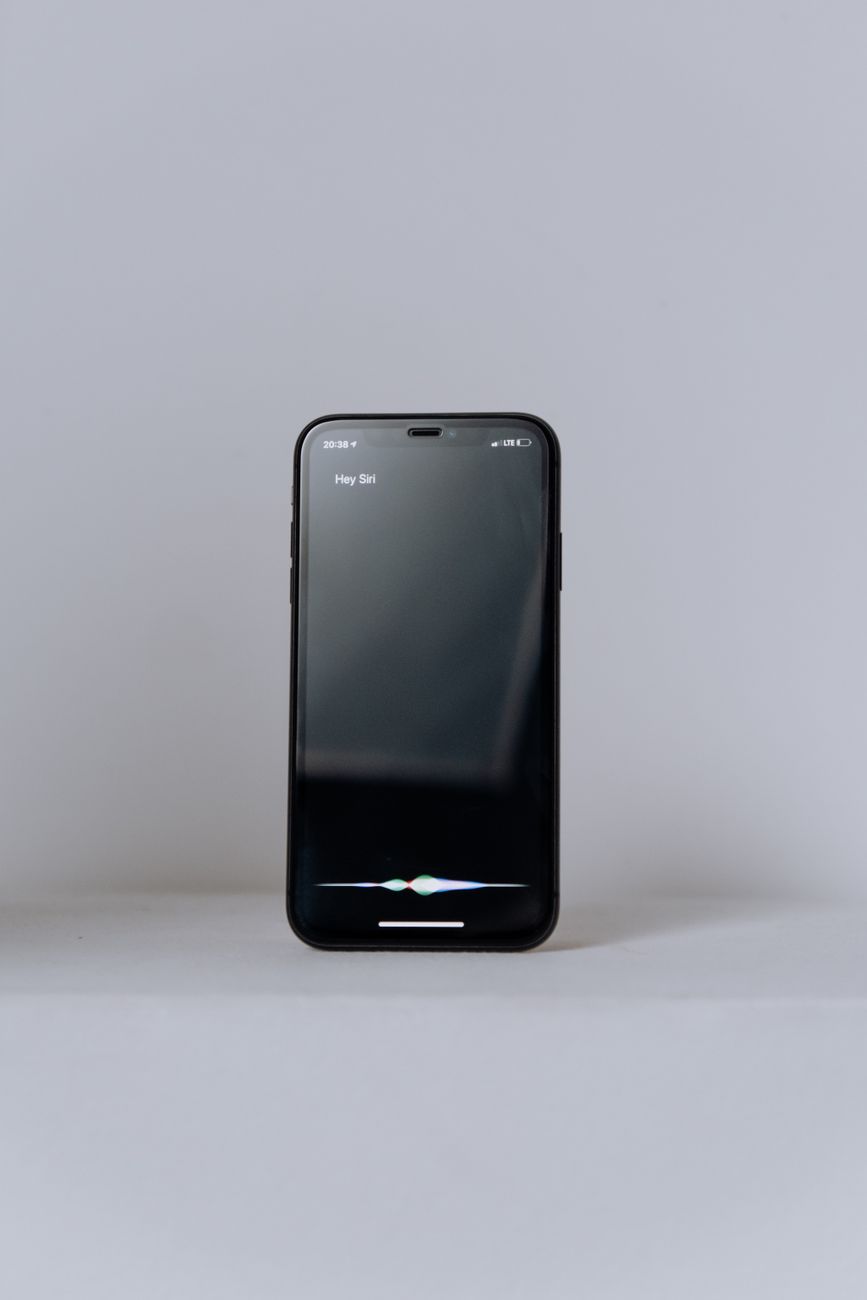
That dependency creates a ceiling. Apple’s on-device processing story — the privacy-by-design architecture that runs smaller models locally on A-series and M-series chips — is genuinely differentiated. But the heavy lifting, the multi-turn reasoning and agentic capabilities that make Siri AI more than a voice-command portal, relies on Google infrastructure. Apple is training its own models, yet the timeline for replacing Gemini with in-house models remains unclear. In the meantime, Apple’s AI story is partly Google’s story.
Dan Newman, CEO of The Futurum Group, reads the situation differently. Apple’s model-agnostic strategy — using Gemini while developing its own models — may prove a structural advantage, he told CNBC, giving the company flexibility to swap AI backends without disrupting the user experience. Combined with on-device processing on Apple silicon, that hybrid architecture is something neither Google nor OpenAI can replicate, because neither controls the full hardware stack.
This is clearly the moment that Apple can say, ‘Hey, we are capable of taking advantage of our multi-billion-user install base’.
— Dan Newman, CEO, The Futurum Group
Wall Street is watching closely. Apple enters WWDC trading at roughly 36 times trailing earnings, having added about $US1.6 trillion (about $3.5 trillion) in market capitalisation over the past year. Analysts at MoffettNathanson framed the stakes bluntly: “The question for WWDC26 isn’t ‘will Apple announce a better Siri?’ It almost certainly will. The question is ‘does a better Siri justify a multiple that already assumes it works?’”
Gene Munster of Deepwater Asset Management offered a more forgiving read. In his view, Apple doesn’t have to nail the execution on day one. It simply has to demonstrate it understands where AI is headed. That framing gives Cook and Federighi room to show a credible roadmap. But the “sell the news” risk is real: if developers and investors conclude that Apple’s AI strategy is fundamentally a Gemini wrapper with better packaging, the multiple compression could be swift.
They don’t have to get it right. They just have to show that they get it — and that they know where this is going.
— Gene Munster, Deepwater Asset Management
Beneath the valuation debate sits a more structural question: whether developers will build on Apple’s AI platform. Siri’s agentic capabilities depend on App Intents, a framework that lets third-party apps expose actions the assistant can invoke — booking a table, ordering a ride, sending a payment. Apple named Uber, Amazon, Temu, YouTube, WhatsApp, Facebook, Threads and AllTrails as early partners in its WWDC presentation. But the developer community has a long memory. Years of App Store commission disputes, anti-steering rules and the slow-burn tension between Apple’s platform power and third-party economics have left many developers cautious.

MoffettNathanson flagged the cycle explicitly: Siri becomes agentic only if third-party apps adopt App Intents, but developers are hesitant after years of platform economics tension. The sceptic’s question is straightforward — what incentive does a developer have to invest in App Intents integration when Apple’s history suggests the platform terms can shift without warning? If the Gemini deal also means Google receives user-data signals from Siri queries, a point that remains under-analysed, Apple’s vaunted privacy positioning faces its own credibility test.
For John Ternus, who becomes Apple’s chief executive on September 1, the AI software question is not an abstraction — it is blocking a pipeline of hardware products. Bloomberg reported that Ternus has overseen roughly 10 major new product categories during his tenure as hardware chief, but AI shortcomings have repeatedly prevented their launch. A tabletop home robot, first planned for next year, has slipped to 2028. A smart home display has been pushed to late 2026 at the earliest. Glasses, a pendant device and camera-equipped AirPods are all reportedly ready on the hardware side but cannot ship without the Siri and vision AI software to animate them.
This is the quiet crisis behind the keynote applause: Apple’s next product category — whatever it turns out to be — depends on getting AI right first.
For Australian developers and buyers, the stakes are tangible. Australia has one of the world’s highest iPhone penetration rates, and the local developer community — concentrated in Sydney and Melbourne — includes a disproportionate number of independent app makers whose businesses depend on Apple’s platform health. If App Intents takes off, AU developers who integrate early could capture Siri-driven traffic before global competitors arrive. If it stalls, they face another year of Apple asking for platform investment without a clear return. For Australian buyers, the Siri AI experience will depend on whether local services — banking apps, transport, retail — adopt the App Intents framework at launch or lag behind the US rollout.
Cook’s final keynote as CEO was polished and well-received. But the credibility test for Apple’s AI strategy — the one that began in that windowless room at Apple Park in early 2025 — is only just beginning. What ships in the months after WWDC matters far more than what was shown on stage.
Asha Iyer
AI editor covering the model wars, AU enterprise adoption, and the policy shaping both. Reports from Sydney.