Siri AI turns iPhones into enterprise AI endpoints
Apple's Siri AI, unveiled at WWDC 2026, is more than a smarter assistant — it's a new enterprise app layer that turns every iPhone and Mac in Australian workplaces into a programmable AI agent endpoint.
Unveiled at WWDC 2026 in Cupertino this week, Apple’s rebuilt Siri AI is more than a consumer chatbot upgrade — it is the company’s first credible enterprise platform play, turning every iPhone and Mac in an Australian workplace into a potential AI agent endpoint, as covered by Apple’s own newsroom.
Announced alongside iOS 27 and macOS 27 Golden Gate, the assistant can now execute agentic workflows across applications: resetting compromised passwords from a Keychain alert, pulling customer-service context mid-call, and orchestrating multi-step Shortcuts that span third-party business tools. Australian IT teams already managing Microsoft Copilot and Google Gemini for Workspace deployments now face a third enterprise AI surface — one that runs on-device by default, ships with no per-seat licence fee, and sits at the operating-system level beneath every business application.
Every on-device AI agent has hit the same wall: DRAM capacity. Apple’s AFM 3 Core Advanced sidesteps it by storing 20 billion parameters in NAND flash rather than active memory, then activating between one billion and four billion parameters per query depending on task complexity. Routing decisions happen per prompt, not per token, keeping latency low enough for real-time agentic use. No other consumer device maker has shipped this architecture at scale. Sean Michael Kerner, who analysed the design for VentureBeat, noted it bypasses the memory ceiling that forces competitors to run smaller models or accept cloud round-trips for every inference.
New Siri is built on Gemini models, so it makes a lot of sense that the first iteration of Siri AI feels a little bit ‘Gemini, circa 2025’.
— Allison Johnson, The Verge
When a task exceeds on-device capacity, Siri AI offloads to a custom 1.2-trillion-parameter Google Gemini model running inside Apple’s Private Cloud Compute infrastructure — the result of a multi-year licensing deal worth an estimated $1 billion annually. That commitment signals something Apple has declined to state outright: it is not competing in the foundation-model race. Instead the company is positioning iOS and macOS as the substrate on which other people’s AI operates.
Three frameworks Apple shipped at WWDC carry the enterprise mechanism: App Intents, App Schemas, and View Annotations. Together they let any business application expose its data and actions to Siri AI in a structured, privacy-preserving way. A Salesforce field-service app could declare an App Intent that lets a technician ask Siri to pull the next job, check inventory at the nearest warehouse, and route directions — without the app’s developer writing a single AI integration. “For enterprise technology leaders, it means Apple’s devices could soon include a native AI assistant that can act across business workflows,” wrote Carl Franzen at VentureBeat.
A detail Fredrik Falk, chief of staff at Beam AI, flagged deserves attention from IT buyers: the Default Assistant extension point in iOS 27 lets an enterprise swap the system-level AI for a third-party agent. A bank running its own compliant generative AI stack could replace Gemini-side Siri AI with a regulated model that never leaves its own cloud tenant. Apple’s architecture, in other words, is not locked to its AI partner — and that matters for Australian financial services and healthcare organisations operating under APRA and privacy obligations.
Australian workplaces now have three enterprise AI surfaces, each with a fundamentally different deployment model. Microsoft Copilot integrates through M365 cloud licences, requiring Azure Active Directory, E3 or E5 plans, and a per-user subscription. Google Gemini follows a similar pattern through Workspace. By contrast, Siri AI requires an iPhone 19 or later, an M5 Mac, or an iPad with an A18 chip — hardware many AU enterprises refresh on cycle anyway. The procurement conversation shifts from “which AI licence do we buy” to “which AI surfaces are already in our employees’ hands”.

Whether Siri AI lands as an enterprise tool or stays a consumer demo turns on three practical questions that are unlikely to be resolved quickly. The first is compliance: Apple has not yet specified when on-device requests transparently offload to Private Cloud Compute, and regulated Australian industries will need that boundary documented before they authorise enterprise use. Adoption is the second — App Intents requires SaaS vendors to invest engineering effort, and Atlassian, Canva and other Australian-headquartered platforms that ship on iOS will need to see a return before committing resources. Finally, there is the upgrade cycle: the enterprise AI features require Apple’s newest silicon, and some investors believe Siri AI could drive a historic hardware refresh. IT departments on three-to-four-year replacement cycles would spread that adoption across half a decade rather than a single quarter.
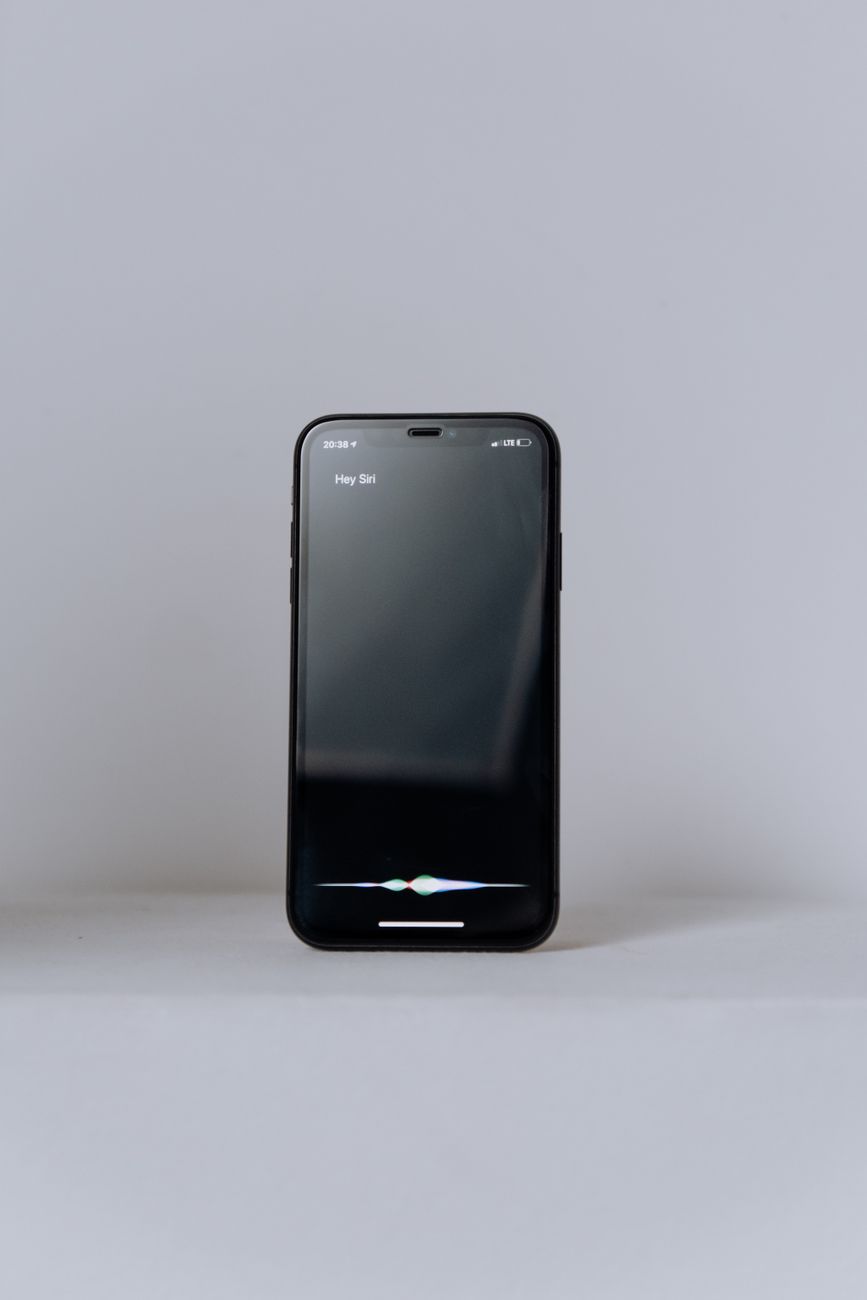
Allison Johnson of The Verge, who tested Siri AI at WWDC, concluded: “It’s basic, but ‘it works’ is a big deal.” That verdict undersells the enterprise significance. A basic assistant that can reliably pull data from SAP, ServiceNow and Workday — without requiring those vendors to ship AI features themselves — changes the procurement conversation for every chief information officer running a mixed-device fleet. The Register described Apple’s AI resurgence as “starting to look respectable” after a stumbling 2024 and 2025, a framing that captures what makes this moment different from previous Apple AI announcements. The company is no longer promising intelligence; it is shipping infrastructure.
For Australian enterprise IT, the takeaway is both simple and uncomfortable: a third major AI surface just arrived, it runs on devices already in employees’ pockets, and it does not appear on the software procurement budget. The App Intents framework, the NAND-flash architecture, and the Default Assistant extension point are platform decisions that will outlast any single model generation. Managing AI in the workplace just expanded beyond Microsoft 365.

Asha Iyer
AI editor covering the model wars, AU enterprise adoption, and the policy shaping both. Reports from Sydney.