Marinus Link case in doubt as Firmus AI factory grows
Marinus Link's business case is under pressure after Firmus Technologies outlined AI data-centre demand that could absorb one-fifth of Tasmania's power.
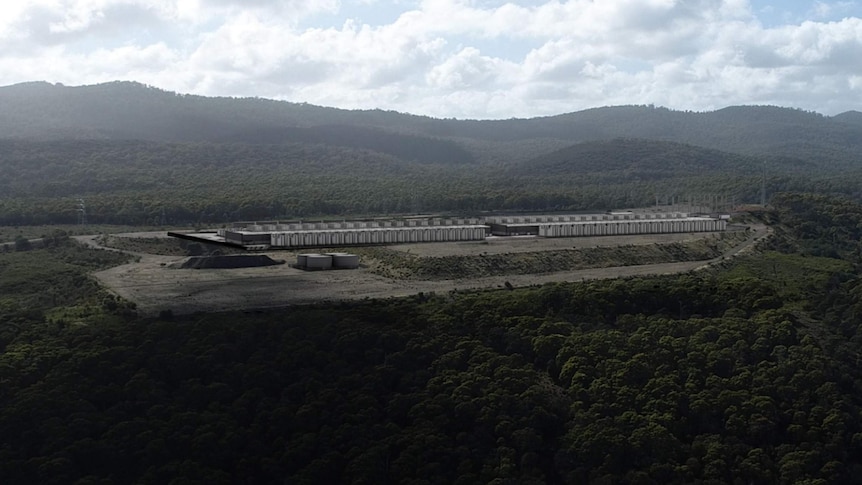
Firmus Technologies’ proposed AI data-centre buildout in Tasmania has put a new question over the business case for Marinus Link, the long-delayed undersea power cable between Tasmania and Victoria. Climate Change Authority chair Matt Kean told ABC News the scale of the AI factory plan could weaken the case for exporting more Tasmanian power if large computing loads are ready to use it inside the state.
The number drawing attention is 400 megawatts. ABC reported Firmus could need 400 megawatts of power, roughly one-fifth of Tasmania’s current electricity use. At that size, a data-centre proposal quickly becomes a grid-planning problem.
The pressure has built in a matter of days. In an earlier ABC report on Firmus’s Tasmania plans, the company said it had signed a 104-megawatt contract with Hydro Tasmania for a St Leonards site and was pursuing three facilities. Data Center Dynamics has also tracked the Tasmania proposal, as data-centre operators look for locations where AI compute can get cheap, reliable power.
If those sites proceed, Firmus would become Tasmania’s biggest power user. Energy planners then face a blunt question: how much Tasmanian generation will be available for export if AI infrastructure keeps buying supply close to the source?
Kean put the tension plainly.
“We have to say that the Firmus proposal and the other data centre proposals for Tasmania, if they get up, does bring into doubt the business case for the Marinus Link. That’s the reality.”
Matt Kean, ABC News
His point was about demand, rather than the wider politics around the project. Large data centres need firm power and long contracts. A single operator able to absorb a fifth of current demand can alter the assumptions behind new transmission spending.
Marinus Link said the cable still had a role in balancing renewable supply across the two states.
“Importantly for Tasmania, Marinus Link will enable hydropower assets to operate more strategically, storing energy when renewable supply is abundant and dispatching it whenever it is needed most.”
Marinus Link spokesperson, ABC News
According to ABC’s current report, Marinus Link is planned as a 1,500-megawatt connection over 255 kilometres. That scale leaves Tasmania weighing two infrastructure bets at once: an export cable built around hydropower flexibility, and AI data centres that would consume more power inside the state.
Firmus co-founder Oliver Curtis has framed the expansion as both a large power purchase and a reason to build more renewables. In the earlier ABC report, he said the company was proud to have signed a large contract with Hydro Tasmania and would support new renewable projects. That argument is now familiar in AI infrastructure: anchor customers promise demand certainty, while governments and utilities still have to decide who pays for the wires, firming and extra generation.
For Australian cloud and AI operators, the dispute is a warning from the edge of the grid. Compute demand is moving faster than many transmission projects. In Tasmania, it has become part of the modelling for one of Australia’s biggest planned power links.

Soren Chau
Enterprise editor covering AWS, Azure, and GCP in the AU region, plus the SaaS shaping local IT. Reports from Sydney.