AI datacentres in Australia collide with land and power
AI datacentres in Australia are colliding with housing land, grid capacity and local approvals as projects turn AI demand into a planning fight.
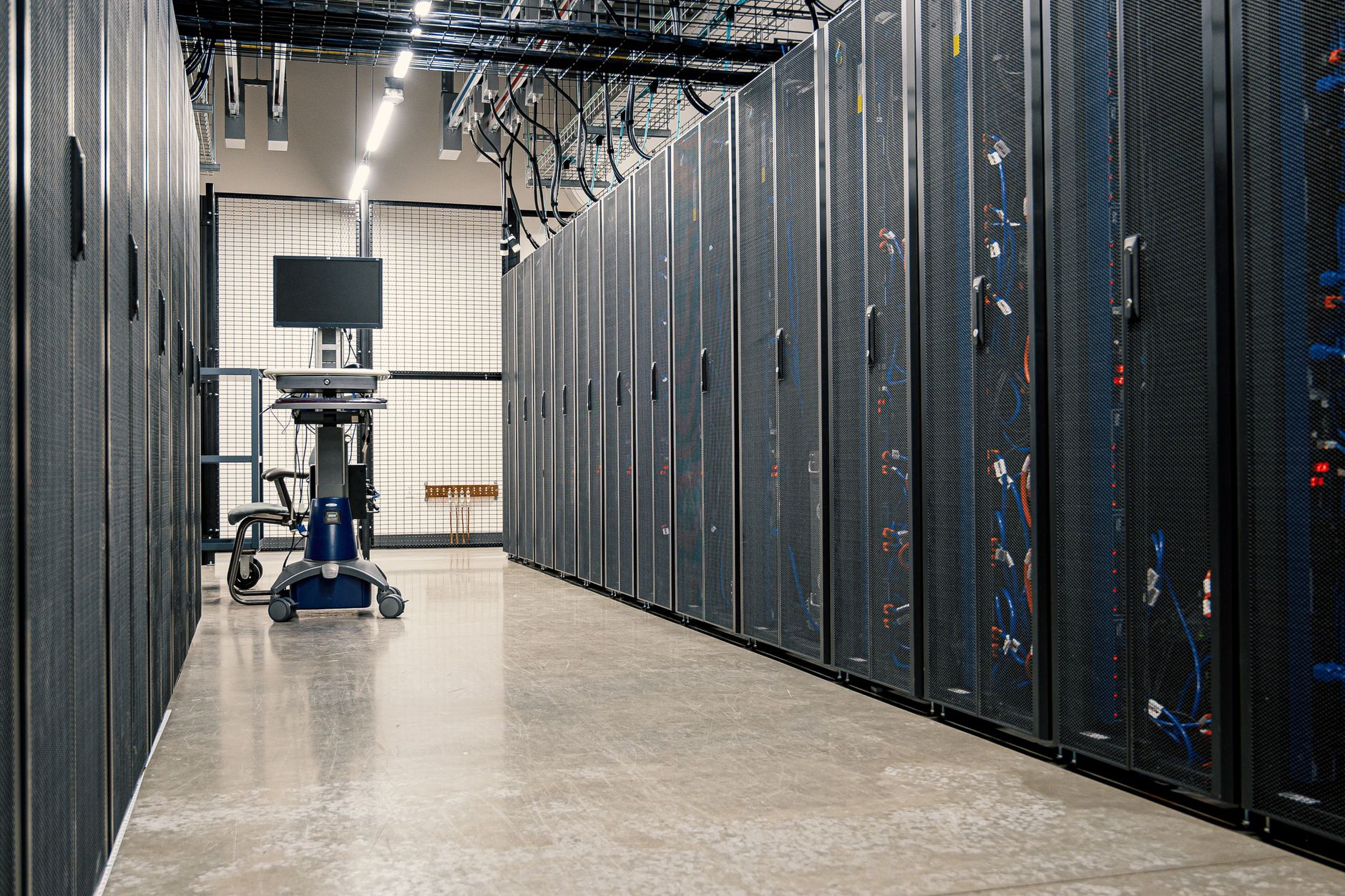
Australia’s AI datacentre build-out is starting to look less like a cloud-computing story and more like a land-use fight. The Guardian reported this week that NSW planners and freight operators are warning hyperscale campuses can consume scarce industrial parcels otherwise needed for logistics and housing, a clash that has moved AI from investor pitch decks into suburb-level politics.
Across the country, the same tension is now visible well beyond Sydney. ABC reporting from Tasmania shows Firmus trying to calm fears over water, noise and electricity demand around proposed sites, while another ABC report from the Northern Territory describes Project Ares, a proposed 19,150-hectare campus on Murranji Station with up to 1 gigawatt of computing capacity. The commercial case for more compute is obvious. The harder question is whether governments can decide, quickly and credibly, where these campuses belong and what extra infrastructure they must fund.
Industry executives say the country cannot hesitate. Belinda Dennett told ABC that “speed to market is the most critical thing”, reflecting the builder-optimist view that approvals, renewables and storage can be synchronised if policy stops wobbling. But planners and communities are reading the same boom differently: the value of more AI capacity is abstract, while the land, poles, pipes and substations are local and immediate.
Land is becoming the first bottleneck
Physical siting, not chips, is becoming the first constraint. Data centres want flat land, heavy power access, fibre and transport links, which is the same mix logistics operators and housing planners want near growing cities. The Guardian’s reporting said Transport for NSW warned datacentres could crowd out industrial land needed for freight and homes. That is not a side issue. It means the AI build-out is now competing inside the same planning system governments are already struggling to use for housing supply.

Labor MP Ed Husic put the housing side of the argument bluntly in The Guardian’s report:
“Land gets snapped up that should have been set aside for houses.”
— Ed Husic, The Guardian
Australia’s pipeline is already large. ABC reported in June that the country has 162 operating data centres and another 90 in the near-term pipeline. That scale helps explain why what once looked like isolated approvals is starting to feel like an industrial policy problem. If every project is assessed one parcel at a time, the cumulative effect on land values, warehouse supply and distribution networks is easy to miss until prices have already moved.
Politically, that means the backlash is shifting from local objection to national allocation fights. ABC’s political analysis argued Labor now faces a datacentre backlash that looks less like anti-tech sentiment than a classic dispute over who gets the land, who gets the power, and who captures the upside. Once a project is seen as bidding against homes or freight sheds, ministers stop talking about compute capacity and start talking about social licence.
Power and water claims now need proof
Power is the second test. Operators need to show, in comparable numbers, how much extra electricity, storage, transmission and water they will add to support the load. The skeptic case is not that datacentres should never be built. It is that marketing slogans about “off-grid” power or “new renewables” are much easier to issue than to audit.

Those numbers are already big enough to force that audit. ABC reported that Firmus says its three Tasmanian sites would need about 400 megawatts. In the Northern Territory, Project Ares’s referral points to as much as 4 gigalitres of water a year at full build-out. That partially answers one of the central community questions: how much resource does a hyperscale AI site actually consume? Enough that the reporting standard can no longer be voluntary or bespoke.
Fast approvals only work if the supporting kit arrives at the same speed. In ABC’s June report Dennett said “speed to market is the most critical thing”.
“Speed to market is the most critical thing.”
— Belinda Dennett, ABC News
That is commercially rational; the AI cycle rewards the first campus that can sell powered floorspace. But a planning regime that speeds approval without locking in new generation, storage and transmission is really just socialising the bottlenecks. The queue does not disappear. It moves to the grid.
Developers know that, which is why Firmus is now leaning hard on the promise that its suppliers will build fresh renewable capacity for Tasmania rather than divert existing power. Yet even that reassurance leaves a governance gap. Residents and councils need a way to compare projects on a like-for-like basis: peak demand, annual water draw, cooling method, backup fuel, transmission works, and what happens if the promised renewable build lags the server hall.
The next fight is about rules, not appetite
Freezing datacentres is not the answer. The builder view has a real case. More compute, more fibre and better grid firming could become productive infrastructure if projects are sited well and if private sponsors pay for the external costs they create. Firmus co-chief executive Tim Rosenfield told ABC the company expects to attract young IT workers to Tasmania, and that promise captures the upside governments want: regional jobs, new load that justifies fresh generation, and a firmer place in the AI supply chain.
“We think that we’ll be a net attractor of young people coming into the IT industry in Tas.”
— Tim Rosenfield, ABC News
Policy is moving more quickly than the rulebook. The Conversation argued in June that Australia still lacks the granular data to measure datacentre water and power use properly. The Guardian’s opinion piece made a parallel point from the policy side, saying Australians deserve a fair return if private AI infrastructure consumes public land, energy and water. Together, those arguments suggest the same conclusion: the next phase of the datacentre boom will be decided less by demand for AI and more by whether governments write credible siting, disclosure and cost-recovery rules before the backlash hardens.
Behind the current arguments is a larger shift. For years, datacentres sat in the background as the quiet plumbing of the internet. In Australia in 2026, they are becoming contested physical assets. Once AI campuses start bidding against homes, freight yards and grid capacity, the sector stops being treated as neutral digital infrastructure. It becomes a planning choice, and voters tend to notice those much faster than boards do.

Soren Chau
Enterprise editor covering AWS, Azure, and GCP in the AU region, plus the SaaS shaping local IT. Reports from Sydney.