StanChart's AI push turns bank automation into a workforce decision
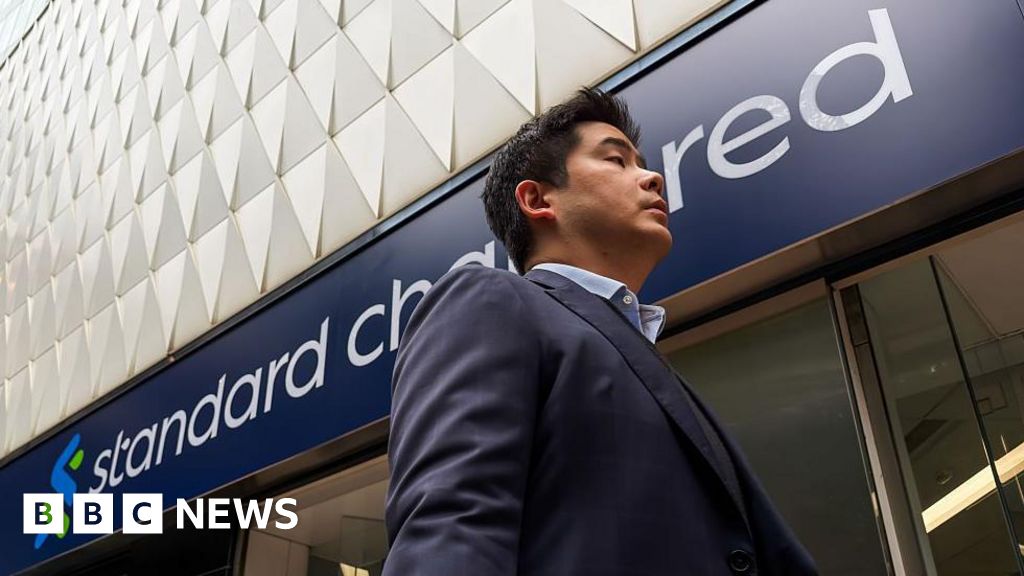
Standard Chartered's plan to cut more than 7,000 jobs shows bank AI spending has moved from pilot projects to workforce design, with compliance still setting the limits.

Standard Chartered does not need to cut staff. First-quarter operating income rose 9 per cent to $US5.9 billion and return on tangible equity hit 17.4 per cent — the kind of quarter that normally keeps headcount steady. Yet the bank has told investors it plans to shed more than 7,000 roles by 2030, tying the reduction to its AI programme rather than to any cyclical pressure. When a profitable bank connects productivity software to staffing assumptions, the workforce signal carries weight.
Reuters reported the cuts would include about 15 per cent of corporate-function jobs, drawn from a global workforce of nearly 82,000. The bank is arguing that software, models and workflow automation can absorb enough administrative and decision-support work to reshape headcount over several years. Three years ago banks were running AI pilots with no clear link to the payroll. This is a different conversation.
Inside the bank, management is telling the story differently. A current Senior AI product owner role in Standard Chartered’s corporate and investment-banking AI centre of excellence shows the work is anchored to frontline and control-heavy operations, not a distant innovation lab. In a Bloomberg interview, chief executive Bill Winters said the shift was “not about cost cutting” but about building “a structurally more productive environment that is fit for future”.
From AI pilot to operating model
Profitable banks do not usually flag multi-year workforce resets unless they think the tooling will stick. For years, lenders described machine learning, automation and copilots as innovation themes — things that might improve service, tighten fraud controls or help staff move faster. Once the same discussion is attached to headcount reduction, the budget stops being experimental and becomes part of the operating model.

Standard Chartered’s own results give management room to make that case. Revenue is holding up, returns are healthy and the bank can describe AI as an enabler of productivity rather than a rescue measure. Reuters quoted Winters saying AI would be “a huge facilitator and enabler” of the programme. Alongside the open AI job listings and the broader expense plan, the message is that management believes the tools are mature enough to change how support work gets distributed across teams.
Corporate functions are the obvious place to start. They sit close to documentation, approvals, reporting and internal service queues — easier to map into software-assisted workflows than relationship management or final risk sign-off. Drafting internal material, triaging service requests, summarising documentation, preparing first-pass compliance checks and routing tasks between systems are all easier to automate than revenue-producing roles where someone owns the client relationship.
The compliance question gets sharper
American Banker recently warned that some large banks are rolling AI out too fast under pressure and fear of missing out. In a regulated institution, speed is only half the story. The other half is auditability. If AI touches customer records, credit analysis, compliance workflows or internal approvals, the bank still has to explain who reviewed what, when and under which controls.

Winters’ insistence that the plan is not simply cost cutting is worth taking seriously, even if investors and employees will hear the word cuts first. In banking, AI only scales when management can show that productivity gains survive model-risk review, data-governance checks and regulatory scrutiny. A bank can remove steps from a process. It cannot remove accountability from a regulated decision. The more automation spreads into operations, the more valuable human oversight becomes at the control points that remain.
The likely result is not a fully automated bank. It is a bank with fewer analysts compiling packs, fewer operations staff moving cases between systems and more senior staff supervising exceptions, escalations and model output. Cutting 15 per cent of corporate-function roles implies management believes some layers of review, co-ordination or administration can be thinned with acceptable risk. That is a bigger claim than saying staff now have a better chatbot.
Why Australian enterprise IT leaders should watch it
For Australian tech readers, the immediate relevance is not about one London-headquartered bank’s payroll. It is about what a profitable global bank’s AI staffing bet says about enterprise adoption in tightly governed industries. When AI investment is tied to workforce design, local CIOs, cloud vendors and software teams should read that as evidence that board-level AI spending has moved beyond proofs of concept. The question becomes whether a model can be embedded deeply enough into a governed workflow that the organisation is willing to redesign the job around it.
Local enterprise teams should also watch what kind of software gets funded in that environment. Products that ship with permissions, logs, escalation paths and model-governance hooks are more likely to win regulated accounts than tools that offer a slick chat interface. Standard Chartered’s move suggests the commercial opportunity in AI is shifting towards workflow redesign and controllability, not novelty.
Regulated sectors — finance, insurance, health, government — have been slower than consumer software companies to declare labour savings from generative AI because their error costs are higher. Standard Chartered’s plan suggests that caution is starting to coexist with harder financial expectations. If the tools can speed up document-heavy, repeatable work without breaking controls, the next step is a budget line, a reporting metric and, eventually, a smaller team doing the same volume of work.
Reuters framed the plan around more than 7,000 roles by 2030. The more important detail is that the bank is making the case while profits are still robust. That turns this from a cyclical cuts story into an operating-model story. Once AI is treated as infrastructure inside a profitable bank, workforce consequences stop looking like a temporary clean-up and start looking like the new math of enterprise software.

Asha Iyer
AI editor covering the model wars, AU enterprise adoption, and the policy shaping both. Reports from Sydney.