Best smart glasses in Australia in 2026: top picks compared
Ray-Ban Meta Gen 2 remains the safest smart-glasses buy for most Australians, while XREAL 1S leads the display-first field and VITURE Beast sits at the premium end.
Smart glasses have split into two camps in 2026: camera-first frames that behave like wearable phones, and display-first glasses that act more like private screens. For most Australians, Ray-Ban Meta Gen 2 is still the safest all-round buy because it looks like ordinary eyewear, starts at $599 and draws less attention in public than most rivals. Anyone chasing a floating display for flights, work trips or a handheld console should skip that camp and start with XREAL 1S instead, with VITURE Beast as the pricier stretch option.
Both PCMag Australia and Tom’s Guide split the market into two product classes: AI-and-camera glasses on one side, and AR or display glasses on the other. That matters more than the marketing. Battery expectations, comfort, privacy trade-offs and local buying paths all shift once a pair of glasses is trying to replace either headphones and a phone camera or a portable monitor.
For Australians, local retail support also carries real weight. A pair sitting on JB Hi-Fi’s shelves is easier to back in an Australian buying guide than a model that mainly appears through overseas reviews and a vendor storefront. The plain details matter here: where the glasses ship from, what they cost in local currency and whether the buyer wants something to wear in public or something to use on a plane, at a desk or in a hotel room.
Which smart glasses are best for most Australians?
For most people, Ray-Ban Meta Gen 2 is the easiest recommendation because it behaves like a normal pair of sunglasses first and a gadget second. Social friction is still the biggest failure mode in this category. A buyer can wear Meta’s glasses on a walk, a commute or a weekend trip and use the camera, speakers and AI features without also carrying a visible display on their face. That is a more settled proposition than chasing the most ambitious spec sheet.

In Tom’s Guide’s Ray-Ban Meta review, Mike Prospero wrote:
“the Ray-Ban Meta (gen 2) continues to reign supreme”
— Mike Prospero, Tom’s Guide
No other pair in this shortlist feels as much like eyewear before electronics.
Meta’s Australian store starts the range at $599. That is not cheap, but it still sits well below the display-first premium models once buyers add accessories. The compromise is clear: Ray-Ban Meta is for capture, calls and AI assistance, not for people who want a cinema-sized screen hovering in front of them. Buyers who want hands-free photos, short video, open-ear audio and something they can wear in public without looking like they are beta-testing the future will have the least buyer’s remorse here.
There is still a catch. A camera in a pair of glasses is what makes the product useful, and what can make other people notice it. Buyers comfortable with that bargain will get the strongest everyday fit from Meta’s range; anyone who wants a private screen and less social signalling should stay in the display-first lane.
Sporty buyers can also look at Oakley Meta Vanguard for $789, but it does not change the basic call. The model makes more sense for someone who already wants that wraparound style or the Meta feature set in a different frame. For most people, Ray-Ban’s lower entry price and broader everyday appeal keep it ahead.
Which display-first pair makes more sense for movies, work and travel?
Once the glasses are really a screen, the buying maths changes. XREAL 1S, VITURE Beast and RayNeo Air 4 Pro all promise a giant-screen effect, but they do not land in the same buyer lane. XREAL is the practical Australian pick, VITURE is the premium entertainment option, and RayNeo is the aggressive budget play.
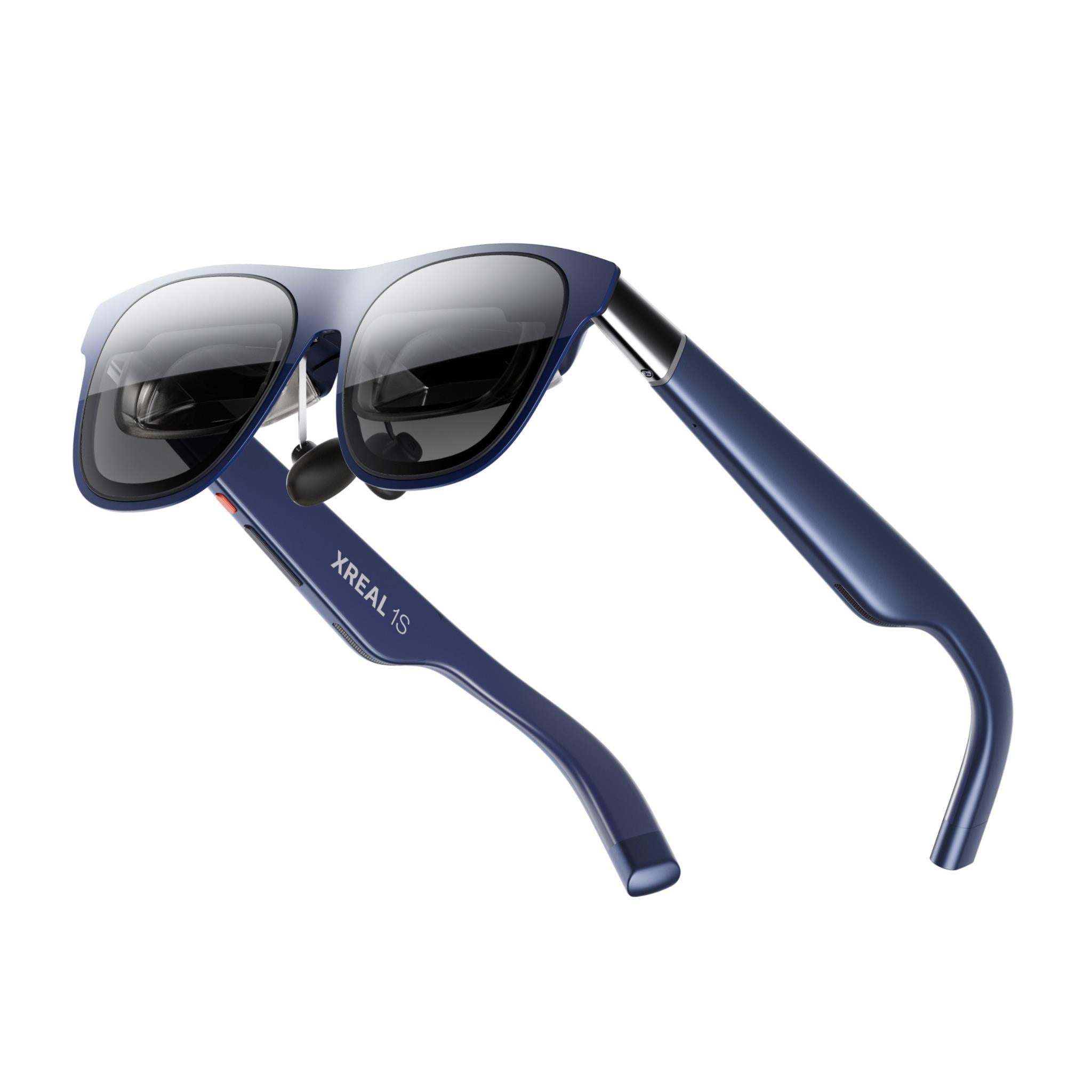
Display glasses make the most sense when the use case is already clear: a private in-flight screen, a second monitor for travel, or a bigger view for a handheld gaming session. That narrows the market, but it also makes the ranking easier. Usually the best pair is the one that delivers the core experience with the least fuss.
In Australia, XREAL 1S has the cleanest buying story. JB Hi-Fi lists it at $799, which is still specialist-tech money but sits in a much saner place than the $1,199 asked for VITURE Beast at JB Hi-Fi. Buyers who want a portable second screen for a laptop, a Steam Deck-style handheld or in-flight video are less likely to care about marketing polish than the cleanest path to purchase.
By contrast, VITURE reads differently. In Tom’s Guide’s VITURE Beast review, Jason England wrote:
“For $549, you’re getting the cream of the crop.”
— Jason England, Tom’s Guide
That helps explain why VITURE keeps surfacing near the top of category rankings, but the Australian number changes the mood. At $1,199 through JB Hi-Fi, VITURE Beast is no longer the obvious value play. It becomes the pair for buyers who know they want the richer display experience and are willing to pay laptop money for it.
Then there is RayNeo. In Tom’s Guide’s review, Jason England argued:
“no other company has been able to match this price (yet).”
— Jason England, Tom’s Guide
RayNeo lists the Air 4 Pro at $US299 (about $460), which makes it the easiest recommendation for price-sensitive buyers who are still curious about display glasses. The caution is not the headline price; it is the buying certainty. In the supplied sources, XREAL and VITURE both have clearer Australian retail footing, while RayNeo’s purchase path is anchored to its own store.
Which smart glasses should Australians actually buy in 2026?
Anyone who wants glasses they can genuinely wear outside, use for quick capture and pair with AI features should buy Ray-Ban Meta Gen 2. Those shopping for a private screen for travel, work or gaming should start with XREAL 1S and move up to VITURE Beast only if they know they will use that bigger-screen experience often enough to justify the jump. RayNeo Air 4 Pro is the wildcard for bargain hunters, while Oakley Meta Vanguard is the style-specific Meta variant rather than a category reset.
The category is still too broad for a clean one-line recommendation. In 2026, Australians are not choosing between five near-identical rivals so much as between two ideas of what glasses should do: quietly capture the world around them, or throw a personal screen in front of it. Start with that question and the shortlist becomes much easier.

Pip Sanderson
Reviews editor on phones, wearables, and the gear that lands in Australian shops. Reports from Melbourne.