Exa Labs $250m raise signals agent-native search boom
Exa Labs' $250 million Series C at a $2.2 billion valuation signals that agent-native search infrastructure is becoming its own category beneath the chatbot layer. Announced a day after Google's I/O search overhaul, the raise landed alongside Parallel Web Systems' $100 million round — a coordinated bet on retrieval built for machines, not humans.

Exa Labs has raised $US250 million ($380 million) in a Series C round led by Andreessen Horowitz, valuing the AI-native search startup at $US2.2 billion — three times the $US700 million it was worth eight months ago. The number is big. Obsessing over it is a mistake.
The round closed 20 May, a day after Google used its I/O keynote to outline the biggest search overhaul in the company’s history. Investors clocked the timing immediately. Exa is betting the search market will soon split in two — and the half that serves AI agents won’t look anything like Google’s consumer product.
“There are billions of humans doing searches — there are going to be trillions of agents, like, very soon,” Exa chief executive and co-founder Will Bryk told Bloomberg. “So we just want to accelerate on all fronts.”
The company has the numbers to back up the rhetoric. Exa processed 1 billion queries in April 2026, a tenfold increase from 100 million a year earlier. More than 400,000 developers use its API, and over 5,000 companies — including Cursor, Cognition, HubSpot, and Monday.com — pay for access. The Series C capital will expand a custom GPU cluster that cost $US5 million to build, extend the crawler footprint beyond 500 billion URLs, and push sub-200-millisecond latency lower.

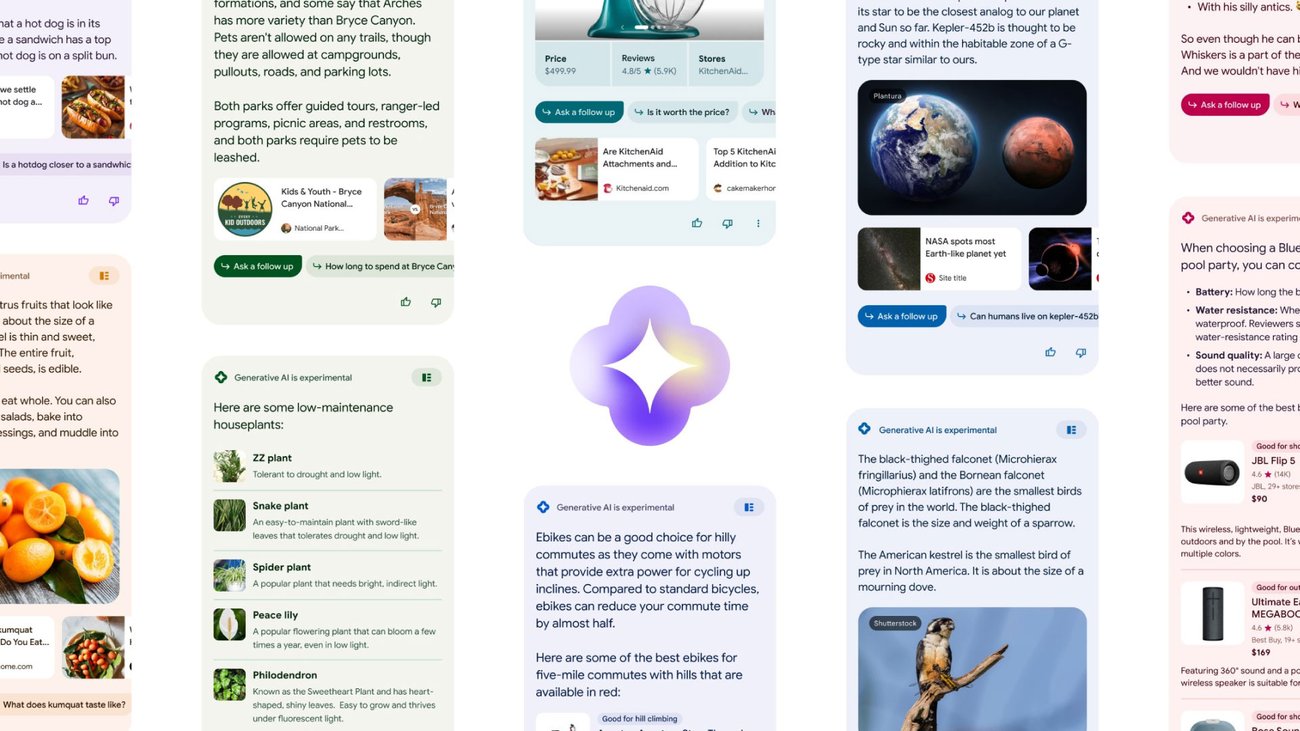
What the round actually signals goes beyond another startup’s valuation. Google spent I/O 2026 pitching AI Mode, an agentic search box, and conversational answers that displace the traditional ten blue links. That vision keeps humans at the centre — the AI searches on your behalf and synthesises results for you to read.
Exa builds for a different customer. An agent running a multi-step research task does not need a snippet. It needs a structured JSON payload with provenance metadata, fetched at machine speed. The end user is another piece of software. Capital markets are starting to price these as separate products.
The same day Exa disclosed its raise, Parallel Web Systems — led by former Twitter chief executive Parag Agrawal — revealed a $US100 million round from Sequoia at a reported $US2 billion valuation. Tavily, which competes directly with Exa on agent-facing search, has drawn fresh funding too. “[Exa is] part of a wave of startups vying to transform search,” TechCrunch reported, naming Tavily and TinyFish alongside it. Three companies building search infrastructure for agents raised nine-figure rounds within the same window. That is not a company bet — it is a category vote.
As we think about AI — this is the mother of all waves. We also think we are entering a new era for search.
— Sarah Wang, general partner, Andreessen Horowitz
The trade-offs look different from a developer’s perspective. Exa scores 81 per cent on the WebWalker benchmark for broad retrieval — comfortably ahead of Tavily’s 71 per cent — but manages only 24 per cent on FreshQA, the industry-standard measure of accuracy on time-sensitive queries. Semantic depth and recency pull in opposite directions. Nobody has figured out how to engineer one without hurting the other. Developers also report a hard rate-limit cliff when the free tier runs out, a practical friction the enterprise sales pipeline has not yet addressed at scale.
Bryk frames Exa’s “built from scratch” architecture as the moat. “Most other search providers actually wrap other search engines and therefore cannot compete on quality, latency, or cost,” he wrote in the company’s Series C announcement. “As we scale up infrastructure and model training in the coming months, the gap between Exa and wrappers will become clearer.” A Google Cloud partnership signed in April 2026 gives Exa a distribution channel inside the enterprise AI stack — potentially placing it as the default retrieval backend for Gemini-powered agents if the integration deepens.
The sceptic’s case deserves a hearing. Google controls the search index, the browser, the mobile operating system, and increasingly the AI model layer. If Google’s own agentic search meets the developer ecosystem’s retrieval needs well enough, the market for a standalone agent-search API starts to shrink before it fully forms. OpenAI has not prioritised retrieval as a standalone product, but it could — and its developer relationships dwarf Exa’s.
A $US2.2 billion valuation requires believing agent-search is a durable, defensible category. The alternative reading is that investors are paying a premium for infrastructure before the hyperscalers close the window.
AI search has stopped being a curiosity. It is now one of the most heavily capitalised sub-sectors of the AI stack, and the companies building it are not tinkering at the edges of Google’s domain. They are constructing a parallel retrieval architecture for workloads that did not meaningfully exist three years ago. Whether that architecture consolidates into independent platforms or gets absorbed by the cloud providers is the question the next 18 months will answer.

Asha Iyer
AI editor covering the model wars, AU enterprise adoption, and the policy shaping both. Reports from Sydney.